

This article contains spoilers for ‘The Odyssey’.Christopher Nolan’s The Odyssey is full of moments that feel almost impossible to adapt. Bringing the Cyclops to life is one thing. Convincingly depicting gods interfering in the lives of mortals is another. But arguably the hardest scene in Homer’s epic doesn’t rely on visual effects or spectacle at all: it relies on a song. The Sirens have become one of the defining monsters of Greek mythology, luring sailors to their deaths with voices so irresistible that no one can hear them without surrendering to temptation. Knowing exactly what awaits him, Odysseus orders his crew to fill their ears with beeswax and tie him tightly to the mast of the ship. No matter how much he begs, screams, or threatens them, they are not to let him go until the danger has passed.
It’s one of the most famous sequences in The Odyssey, but it’s also one that’s repeatedly fallen short on screen. Every adaptation has to answer the same impossible question: what could the Sirens possibly sing that’s worth dying to hear? Nolan’s answer is to stop treating the scene like it’s about the music, and in doing so prevented his version of the scene from becoming cheesy like so many others before it had.
Christopher Nolan Realized the Sirens Were Never Really Selling a Song
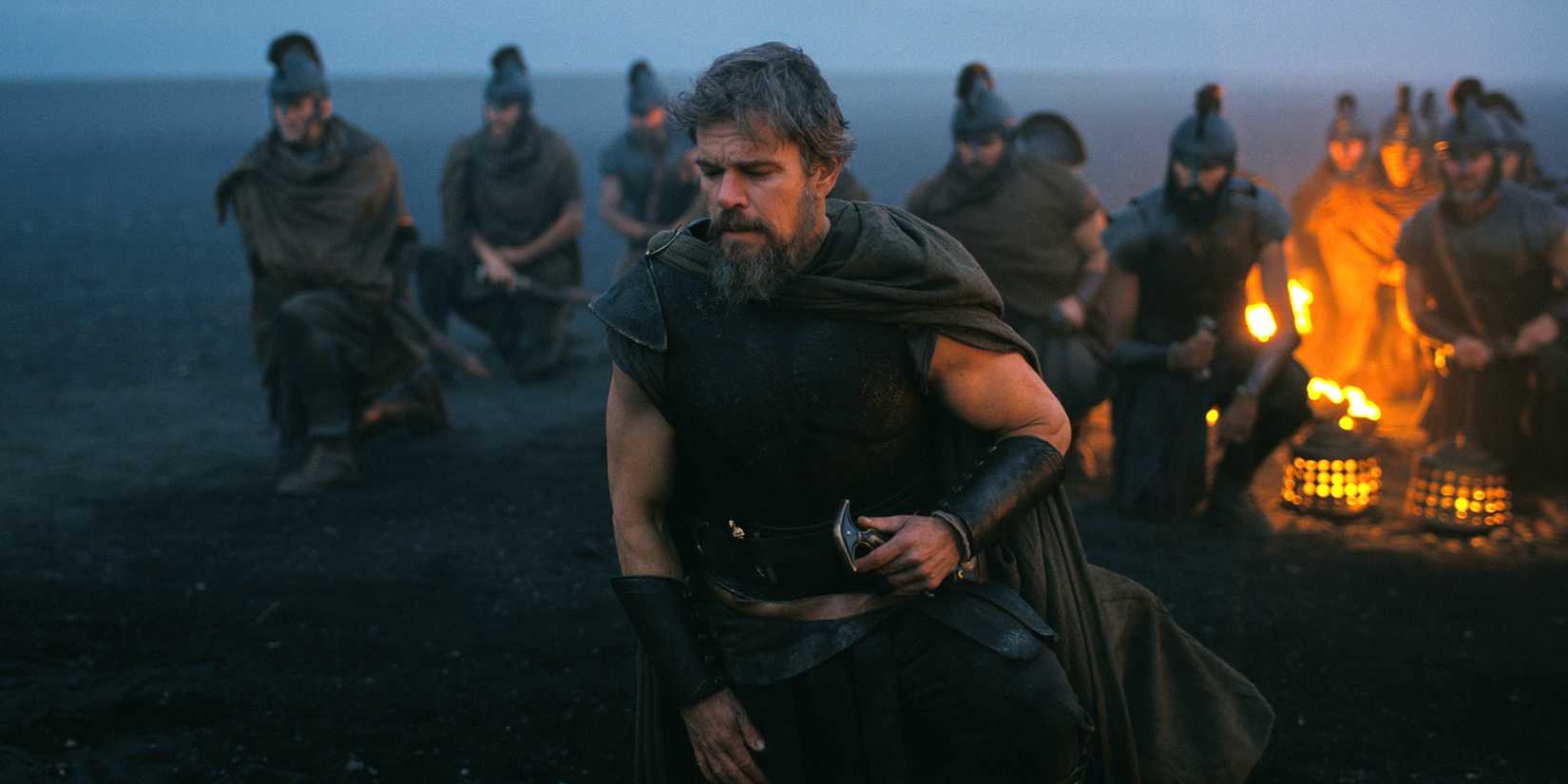 Image via Universal Pictures
It’s easy to think of the Sirens as supernatural singers whose beautiful voices magically enchant anyone who listens. Plenty of adaptations have leaned into that interpretation, emphasizing haunting melodies and hypnotic performances while asking audiences to accept that these creatures can simply sing better than anyone else. But that’s not really what Homer wrote. When the Sirens call to Odysseus, they don’t spend much time praising their own voices. Instead, they make him an offer.
“Famous Odysseus, great glory of Achaea,” they sing. “Draw near, and bring your ship to rest, and listen to our voices.” They promise that anyone who stops to hear them will continue on “a wiser man.” They claim to know everything that happened during the Trojan War and everything taking place across the Earth.
That’s an incredibly specific temptation. Odysseus isn’t just a great warrior, he’s defined by his intelligence and curiosity. Throughout his journey, he survives because he constantly searches for answers, thinks his way through impossible situations, and refuses to accept what appears on the surface. The Sirens don’t tempt him with romance or pleasure. They tempt him with the one thing Odysseus has always shown a thirst for: knowledge. They promise answers to questions no mortal should ever be able to ask. The song itself is almost secondary, serving purely as a delivery system. What matters is the idea behind it, and that’s exactly what Nolan understands.

Related
Christopher Nolan Officially Scores His Highest Rotten Tomatoes Score of All Time for ‘The Odyssey’
“Let’s go!”
Nolan Solves a Problem That Has Challenged Filmmakers for Decades
The reason the Sirens are so difficult to adapt is that audiences naturally expect to hear something extraordinary. After nearly 3,000 years of stories describing the world’s most irresistible song, no real piece of music could ever live up to that reputation. If viewers start evaluating the melody itself, the illusion is already broken. Nolan sidesteps the problem by making the audience focus somewhere else. Rather than asking us whether the Sirens sound beautiful enough, he asks us to watch what happens to Odysseus.
Matt Damon’s performance becomes the real centerpiece of the sequence. The man who carefully planned this encounter knows exactly what’s happening to him, yet he still can’t resist it. He strains against the ropes, desperately tries to free himself, and completely loses the composure that has defined him throughout the journey. Watching someone as intelligent and disciplined as Odysseus unravel tells us more about the Sirens than how pretty their song could be.
Nolan’s Biggest Change Makes the Sirens Even More Terrifying
Nolan also makes one crucial change to Homer’s version of the encounter, and it’s one that solves the scene’s biggest problem on screen. In the original poem, Odysseus is the only member of the crew who hears the Sirens. His sailors have sealed their ears with beeswax, leaving them to watch their captain desperately struggle against his restraints without understanding why. Everyone survives the encounter because they follow his instructions perfectly. Nolan raises the stakes by having one crewman remove the wax from his ears, who throws himself into the sea, unable to resist whatever the Sirens are promising him. He likely just wanted to go home too. It’s a small change, but an effective one. Rather than asking the audience to decide whether the Sirens’ song lives up to thousands of years of expectation, Nolan lets us judge it entirely through its consequences. We don’t need to hear every note to understand its power. We watch one man abandon his ship and another fight with everything he has to break free of his restraints, and that’s enough. In other words, Nolan never tries to prove that the Sirens are irresistible. He shows us.
The Sirens aren’t terrifying because they’re the greatest singers who ever lived, they’re terrifying because they know exactly what their listener wants most and promise to give it to them. For Odysseus, that’s knowledge. Nolan didn’t solve one of The Odyssey’s hardest scenes by trying to create the perfect song, he solved it by recognizing that Homer never asked readers to fall in love with the music. He asked them to understand why Odysseus couldn’t resist the promise behind it. That’s what makes Nolan’s version so effective. Instead of trying to convince the audience that the Sirens are irresistible, he convinces us that their offer is.
Release Date
July 17, 2026
Runtime
172 Minutes



