

Expectations for action films are either very high or very low; fans of the genre know what they want from a well-crafted action film, but every now and then, an action film transcends genre conventions and wins people over regardless of age or preference. Surprisingly, most of the films that have done this also have incredibly iconic endings that help elevate action beyond just fast-paced filmmaking.
The best action movie endings offer more than just explosions and witty one-liners; they also provide emotional closure, character catharsis, and a final image that stays with you forever. These are the ten most perfect action movie endings of all time, ranked by how satisfying they are.
10
‘The Raid 2’ (2014)
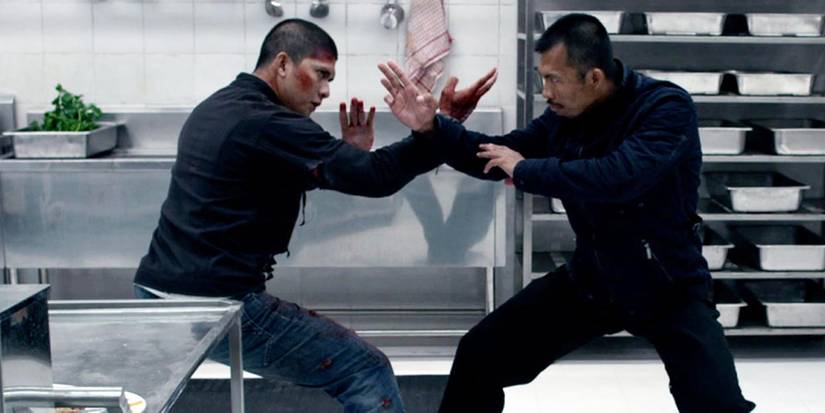
Image via Sony Pictures Classics
Gareth Evans’ The Raid films have taken the world by storm, and they are excellent examples of dedicated action filmmaking. While living in Indonesia, Evans collaborated with Iko Uwais, an expert in the Indonesian fighting style known as pencak silat, to highlight the discipline and create an unforgettable action experience. The Raid 2 is notable for its iconic ending, which action fans still discuss. It focuses on undercover cop Rama (Uwais), who has spent the entire film infiltrating a Jakarta crime syndicate. In the final moments, he fights the elusive Assassin in a lengthy, brutal kitchen fight. After killing the Assassin, Rama is shot and ambushed by the Japanese mafia; the leader offers him a deal, but Rama refuses, standing tall and knowing he will most likely die. The screen goes black.
The Raid 2 has a bleak but ultimately realistic ending; it’s the type of anti-Hollywood formula that’s becoming increasingly popular. If Rama had survived all of those wounds, he would be considered a mythical hero, but he is not. He’s just a man who tries to bring corruption down through his own actions, and his death is as violent as his life. Uwais is incredible throughout the film, and his fight with the character The Assassin is widely regarded as one of the best fight scenes ever shot.
9
‘Aliens’ (1986)
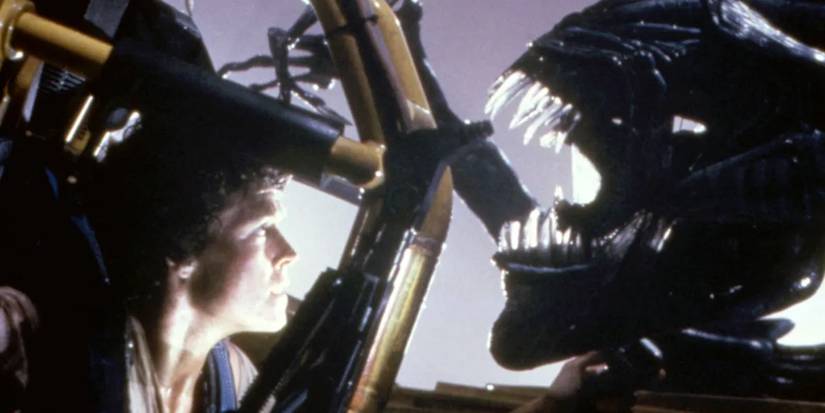 Image via 20th Century Studios
Aliens, a sequel to one of the greatest sci-fi horrors of all time, is a masterclass in action cinema. It departs from the darkness that characterized the first film, honoring and expanding on it to become an action film masterpiece. James Cameron always knew how to make action sequences stand out, and his film endings are often memorable. In Aliens, Ellen Ripley (Sigourney Weaver) faces the Alien Queen for the final time. She appears dressed in a cargo loader exosuit, saying the iconic line, “Get away from her, you bitch!” and the two fight inside the airlock. Ripley opens the outer door, and the Queen is sucked into space; after barely making it out of the cargo, Ripley collapses and turns to Newt, who jumps into her arms.
The final battle is a winning combination of practical effects and great acting. The cargo loader suit is an iconic piece, and Ripley’s line has echoed throughout history, depicting her transformation from terrified survivor to warrior mother. And, while the hypersleep ending provides closure while leaving room for a sequel, many people believe Alien 3 is an inadequate continuation and would rather consider Aliens’ ending as a standalone story. A fun fact is that the exosuit was a fully functional prop weighing over a ton that Weaver trained to operate, with another stuntman operating it from behind her for the fight scene.
8
‘John Wick: Chapter 4’ (2023)
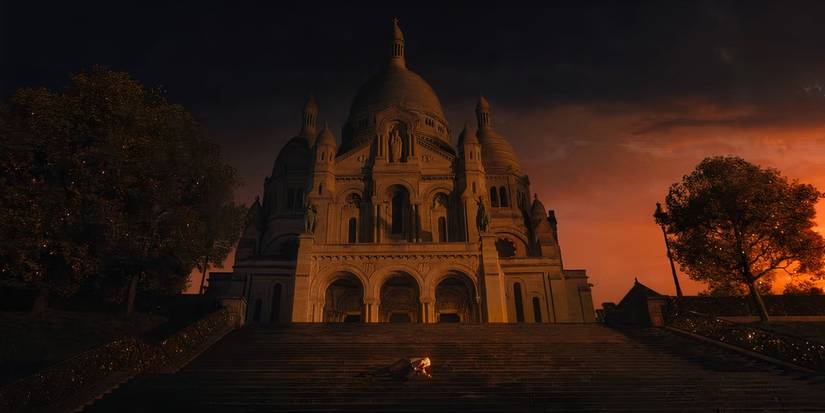 Image via Lionsgate
The John Wick saga, starring Keanu Reeves, has unexpectedly become a franchise. Chad Stahelski, a director and stuntman, collaborated with Reeves (after years of serving as his stunt double) to create one of the best action franchises of all time. The storyline of John Wick as the main character ends with John Wick: Chapter 4, concluding with Wick finally killing the brutal and arrogant Marquis (Bill Skarsgard) and gaining freedom from the High Table. However, he is severely wounded; he sits on the steps of the Sacré-Cœur in Paris, thinks of his wife, and collapses. Cut to Winston (Ian McShane) and the Bowery King (Laurence Fishburne) standing at his grave, wondering if John is in heaven or hell.
While the ending may appear ambiguous to some, it is a highly poetic and deeply satisfying conclusion. Many of the film’s characters and viewers believed that John Wick’s freedom could only come through death. The sunrise over Paris is both beautiful and mournful, and the Bowery King standing graveside with Wick’s dog completes the circle. Reeves has stated that he believes Wick is dead, but Stahelski left it ambiguous to honor the character’s journey and to probably extend the Wick saga in some way.
7
‘Heat’ (1995)
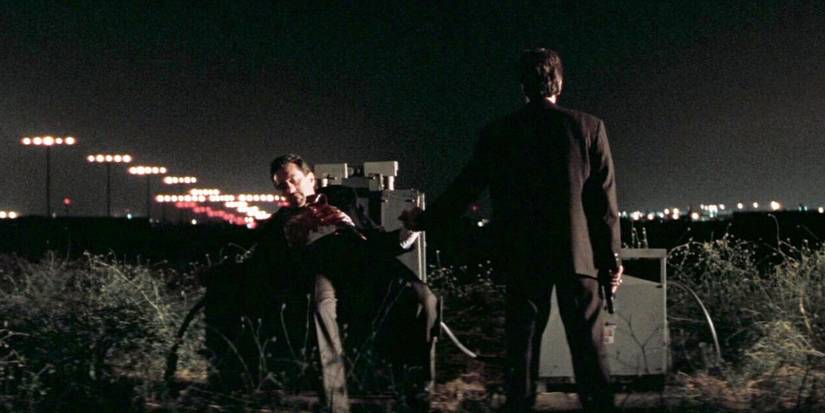
Image via Warner Bros.
People often say that Heat is one of the best movies ever made, and this epic action thriller has definitely stood the test of time. It’s a model for extended gunfight scenes and action choreography and just a great movie in general. While the iconic diner meeting between Robert De Niro and Al Pacino is the film’s main draw, the ending is equally memorable. Heat ends with Neil McCauley (De Niro) preparing to flee with his girlfriend Eady. However, after discovering where Waingro (Kevin Gage) is, he seeks him out, kills him, and returns to the airport, where he is confronted by Detective Vincent Hanna (Pacino). Hanna shoots Neil, and as he dies, Neil tells him, “I told you I was never going back.” Hanna holds his hand as he dies.
Heat is mostly a meditation on obsession and loyalty, but the ending truly solidifies this notion. While it highlights Neil’s inability to walk away as his most fatal flaw (he chooses revenge over freedom), it also depicts Hanna’s melancholy over finally catching his “white whale.” The final scene between enemies, in which Hanna holds Neil’s hand, is a moment of profound respect that reinforces the film’s thesis that these men are cut from the same cloth, just sewn on opposite sides. This is one of the best endings in crime cinema.
6
‘The Dark Knight’ (2008)
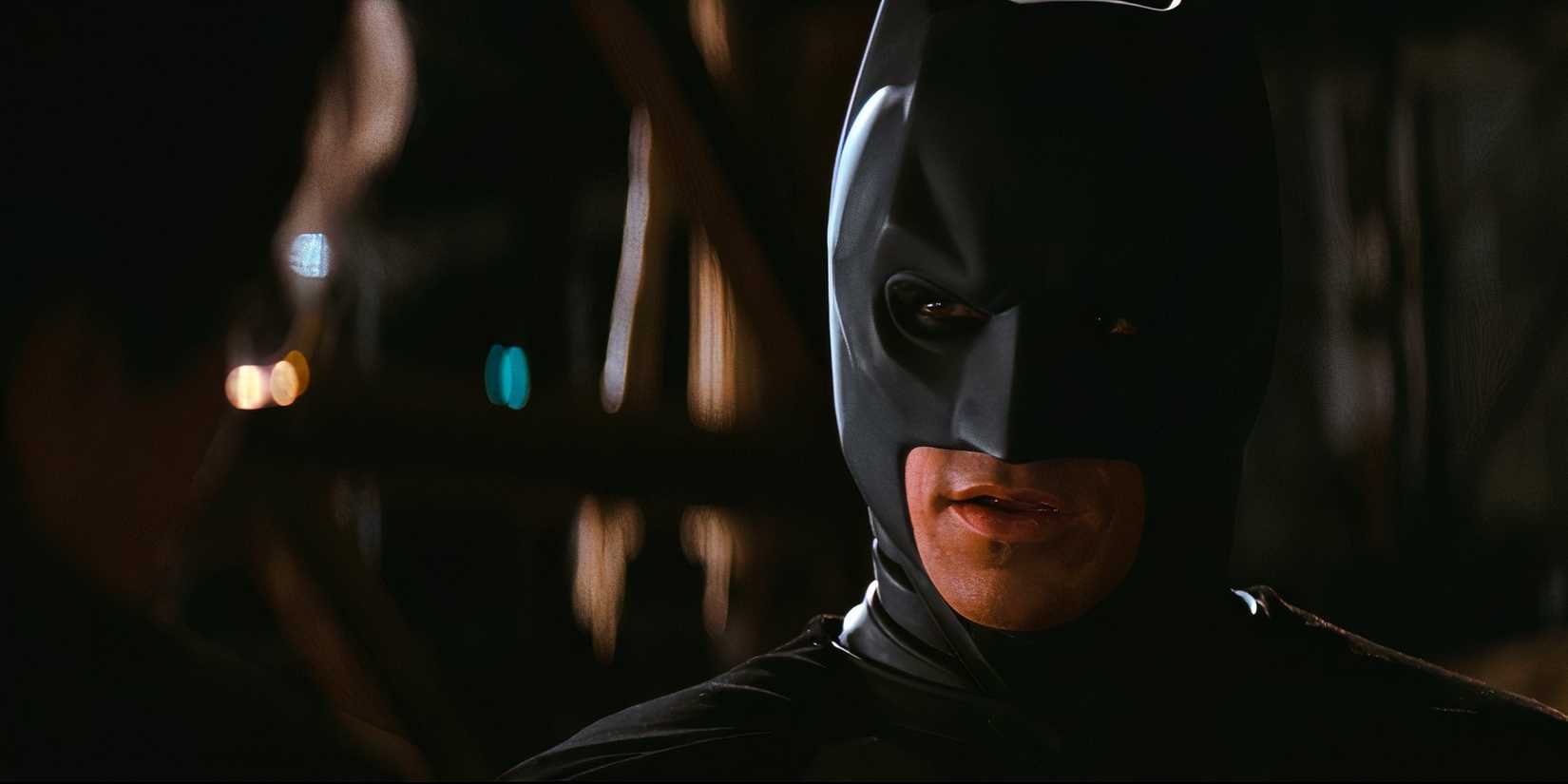 Image via Warner Bros. Pictures
The Dark Knight has one of the most iconic lines in film history: “You either die a hero or live long enough to see yourself become the villain.” Harvey Dent (Aaron Eckhart) says it to Bruce Wayne (Christian Bale) over dinner, and Bruce, dressed as Batman, says it again to Commissioner Gordon (Gary Oldman) at the end of the film. The Dark Knight concludes with Batman defeating the Joker, but the Joker’s final trick is complete: he has transformed Dent into a murderous villain. To protect Dent’s public image as a hero in Gotham, Batman decides to accept responsibility for Dent’s crimes. After Gordon and his son see Batman flee, the screen fades to black and the credits begin.
The ending of The Dark Knight totally busts the superhero myth. The man we’re used to seeing win against formidable enemies, Batman, gives up his reputation for the greater good, showing that he understands the ultimate sacrifice. It also portrays him, and thus Bruce Wayne, as a genuine force of good who believes in justice, rather than seeking public fame and adoration. Most people believe Batman deserves to be hailed here, so this ending is morally complex; it is still remembered and revisited today.
5
‘First Blood’ (1982)
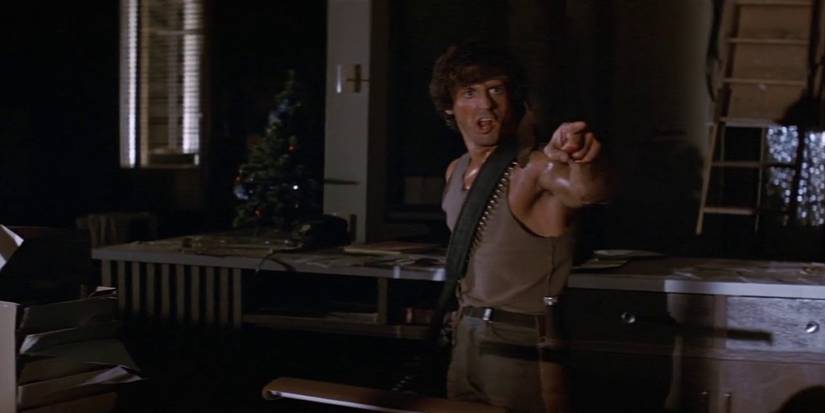 Image via Orion Pictures
First Blood is the type of action legend that makes you think; the tragedy of John Rambo, a Vietnam War veteran, is portrayed as a high-octane action film with a lot of emotion. Rambo does not die, as in the novel on which First Blood is based, but Sylvester Stallone gives him a powerful emotional arc through a monologue that would make even a rock feel something. In First Blood, Rambo is pursued through the woods by a small-town police force. After getting injured and ambushed, he meets his former commander, Colonel Trautman (Richard Crenna). He breaks down in front of Trautman and delivers a heartbreaking monologue about his time in Vietnam, detailing his friend’s tragic death and the civilians who spat on him when he returned.
Rambo’s monologue elevates the film from a revenge thriller to a devastating critique of how America treated its Vietnam veterans. The ending is incredibly emotional and completely reframes the preceding violence, and Stallone’s performance is raw and vulnerable, helping the ending he devised elevate First Blood from a genre movie to a classic. Yes, Stallone insisted on a monologue and an ending that differed from the novel; despite the studio’s objections, Stallone got his way, and we got an iconic ending.
4
‘Mad Max: Fury Road’ (2015)
Mad Max: Fury Road is a masterclass in action filmmaking and the best film of the 21st century. It’s also a never-ending, two-hour chase across the Wasteland created by George Miller, with chaos, pursuit, and high stakes throughout the film, never letting viewers rest—in a good way. The film concludes with Furiosa (Charlize Theron) and Max (Tom Hardy) overthrowing the tyrant Immortan Joe, who hoarded all the water in his fortress, The Citadel. Furiosa, wounded, stands before the crowd and enters The Citadel; from above, the residents of the fortress let water flow to the people below, who scream in delight. After giving his blood to save Furiosa, Max fades into the crowd, nodding to her; she returns the nod, a faint smile on her face, and the screen goes black.
This conclusion, like the rest of Fury Road, is a masterclass in visual storytelling, removing the need for elaborate monologues and explanations. Max’s disappearance reinforces his loner nature without undoing his development, while Furiosa’s survival (and ascension) destroy the “fridging” trope—she was never a love interest, but rather the film’s protagonist. The water release feels like a literal baptism, too, washing away the oppression of the old world, and the final shot of Furiosa is one of the most powerful images of an action hero in modern cinema.
3
‘Die Hard’ (1988)
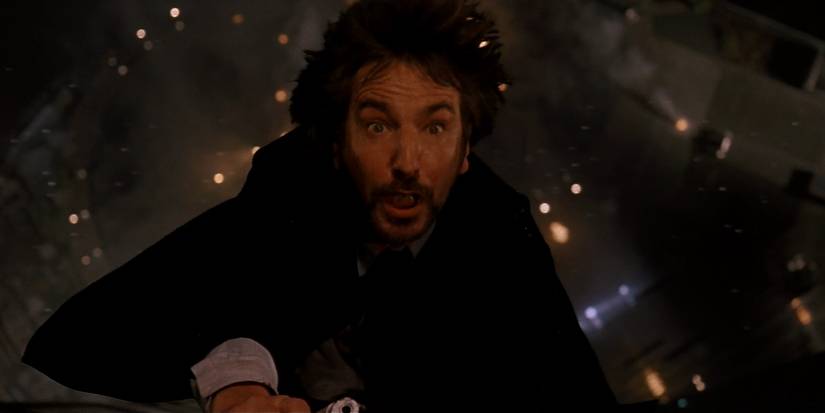 Image via 20th Century Fox
For many people, Die Hard is synonymous with action. This John McTiernan film is relentless, memorable, and brilliantly lovable; it has funny one-liners, a witty and sexy protagonist, an evil and maniacal villain, and personal stakes interspersed with high-octane action choreography. The film is set in a fictional office skyscraper called Nakatomi Plaza, and our hero, John McClane (Bruce Willis), has spent the night crawling through air vents, walking on broken glass, and killing terrorists in order to save his wife. In the end, she is held at gunpoint by the main villain, Hans Gruber (Alan Rickman). After a fight, Gruber is dangling from the skyscraper, still clutching McClane’s wife. McClane removes her watch from her wrist, and Gruber falls to his death. Just when we think it’s over, another terrorist emerges with a machine gun, and a cop, Al Powell, who has been McClane’s radio lifeline all night, shoots them.
The ending is brilliant because it creates iconic imagery and uses McClane’s personality and dexterity as a final weapon. He doesn’t win by showing off his shooting abilities; instead, he defeats Gruber in a deceptively simple manner. Additionally, Gruber’s fall is poetic justice, while Al Powell’s final use of a weapon allows him atonement for the mistakes he made before. “Let It Snow” playing over the credits is the icing on the cake; because of this, many people consider Die Hard to be a Christmas movie.
2
‘Terminator 2: Judgment Day’ (1991)
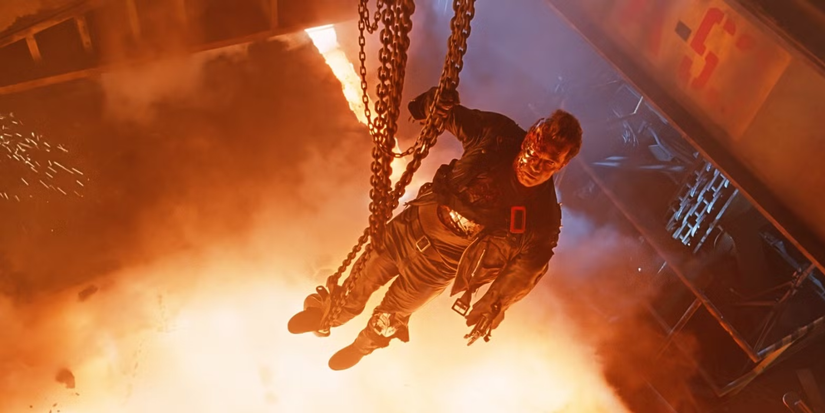
Image via Tri-Star Pictures
When we talk about cinematic perfection, Terminator 2: Judgment Day is frequently mentioned. James Cameron’s action masterpiece may have cost him a lot of money, but it also paid off handsomely, as anyone who saw T2 during its peak recalls how impressive the T-1000 looked on screen. T2 follows the T-800 (Arnold Schwarzenegger), a reprogrammed future cyborg who returns to protect young John Connor while being pursued by the shape-shifting T-1000 (Robert Patrick). Finally, the T-800 has helped destroy the T-1000 in a steel mill, but he is aware that his chip is also too dangerous to remain. He informs John that he must be terminated, and John begs him not to leave, to which the T-800 responds, “I know now why you cry, but it is something I can never do.” As he is lowered into the molten steel, he gives one final thumbs up before sinking completely.
T2’s ending is probably the most emotionally devastating in action cinema. The thumbs-up is iconic, representing a machine that has learned what it means to be human; the gesture is both heartbreaking and heroic. After the T-800 dies, the film concludes with Sarah’s voiceover, which conveys hope; the final shot of the empty highway is an excellent visual metaphor about how the future still remains unwritten. The film concludes not with a bang, but with a quiet, tearful goodbye, marking the gold standard in action filmmaking.
1
‘The Matrix’ (1999)
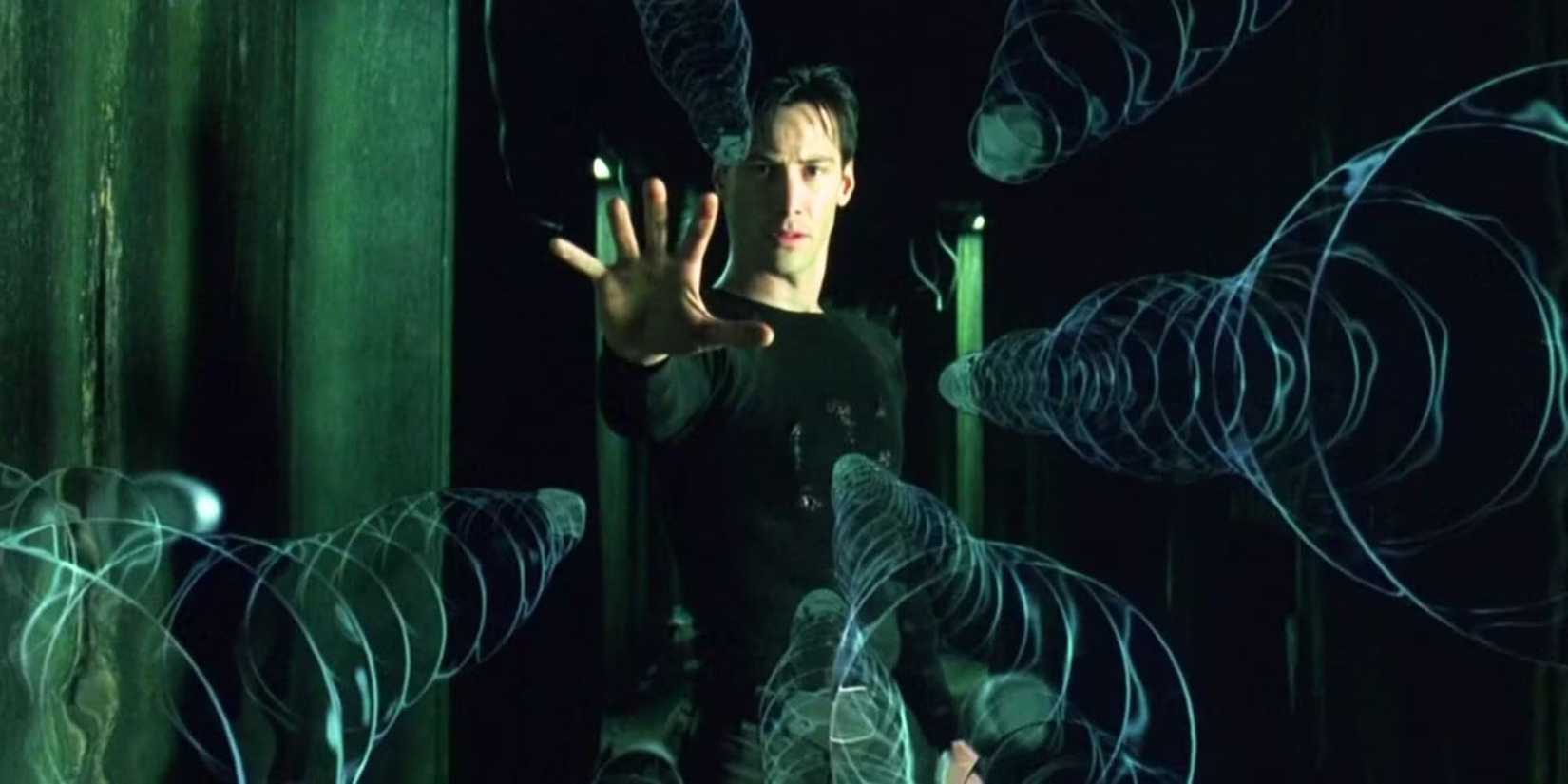 Image via Warner Bros.
As one of the greatest action films ever made, The Matrix is part of a larger story—with four films and an animated feature in the franchise, The Matrix’s story can last forever and remain relevant across time. However, if it all had ended with the first film, it would have been fine—The Matrix has arguably the best ending in action cinema. Agent Smith (Hugo Weaving) kills Neo (Keanu Reeves) inside the Matrix after Neo joins the human rebellion against the machines keeping humans in the Matrix. But Trinity’s (Carrie-Anne Moss) kiss and confession of love outside the Matrix resurrects Neo, and he gets up and realizes he can now see everything in code; he has become The One. Neo stops a volley of bullets fired by the agents before jumping into Smith’s body and exploding him from within.
Neo’s final message to the machines is, “I’m going to show these people what you don’t want them to see; I’m going to show them a world without you.” This ending shows that Neo is transformed from a confused hacker to a messianic superhero. The bullet-dodging callbacks are satisfying, but the real power comes from Neo’s final voiceover, in which he declares war. The abrupt cut to black at the first guitar riff of Rage Against the Machine’s “Wake Up” is one of cinema’s most electrifying edits. It promises more without ending on a cliffhanger and declares victory.
The Matrix
Release Date
March 31, 1999
Runtime
136 minutes



