

There are still plenty of filmmakers still inspired by the works of Alfred Hitchcock, from the way he crafted suspense to how he dropped ordinary people into extraordinary situations. In 2007, director George Ratliff took the psychological thrills of a Hitchcockian atmosphere and brought them to a modern urban domestic setting, where nothing is as it seems. Joshua paints a familiar picture of an ordinary nuclear family living in an American city, but as an insidious development slowly starts infecting the household, we are forced to rethink everything we know about family dynamics. It’s a true Hitchcockian film where we can identify with at least one of the family members and wonder how we would react in that increasingly intense situation.
‘Joshua’ Takes an Ordinary Family and Turns Them Into a Domestic Nightmare
 Image Via 20th Century Fox
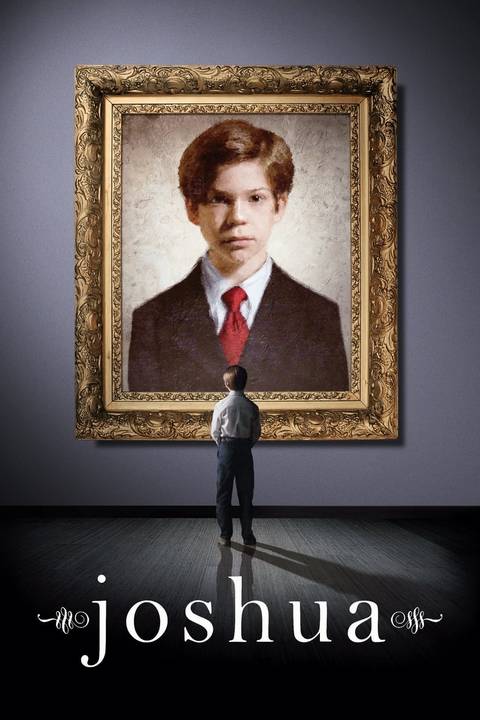
The psychological thriller introduces us to a seemingly average nuclear family, including Abby (Vera Farmiga), Brad (Sam Rockwell), and the titular nine-year-old boy (Jacob Kogan). At the beginning of Joshua, the family welcomes a baby girl, and while they are all ecstatic, small cracks start being exposed in their dynamics. Abby deals with post-partum depression, while Joshua gradually starts to become jealous over the attention taken away from him, while displaying a troubling preoccupation with ancient Egyptian mortality practices. Meanwhile, Brad is at his wits’ end with keeping his family together financially and emotionally.
True to Hitchcock’s style, the family dynamics in this traditional household, even if it is located in a city apartment rather than a cookie-cutter suburban home, are completely ordinary and relatable. We have seemingly loving parent-child and marital relationships, a somewhat infuriating bond with Abby’s religious mother-in-law (Celia Weston), and a fun uncle (Dallas Roberts) who flits in and out of their lives. But as danger in the form of a potentially sociopathic child begins to take root, the cracks in their relationships are uncovered and become increasingly strained, kicking off the undulating suspense and anticipation that Hitchcock would applaud.
‘Joshua’ Creates an Unrelenting, Creepy Hitchcockian Atmosphere
One of the key elements of Hitchcock’s style was building suspense and dread over time. This kept the audience hooked and firmly engaged as the situation became more unbelievable. Joshua does exactly that. The premise is familiar until it’s not, but at that point, we are already wrapped up in the psychological intensity and fraught family dynamics of it all. There is a steady and linear increase in tension throughout the film, where we almost immediately recognize the sinister nature of Joshua, but can’t tear our eyes away as we wonder just how far he is willing to go. The domestic environment gradually becomes a pressure cooker for paranoia, frustration, and fear, as even we can’t quite prove that he is the root of all evil in this household.
There is a suspense in constantly second-guessing every turn in this film. We’re waiting for a turning point or just a minor twist that detracts from the inevitable conclusion we see looming in the distance. That being said, Joshua does pull the rug from underneath you in its final act, like any true Hitchcock thriller, but certainly not in the way you would expect. Placing the story in a city environment rather than Hitchcock’s usual rural small towns creates a feeling of anonymity, swallowed up in a faceless crowd. It makes the entire ordeal feel more isolating, even if we’re in a crammed apartment and not the remote Bates Motel. It’s as if the walls are closing in on the family, suffocating them with the dread within the apartment while appearing frustratingly ordinary on the outside, until some aspects slowly leak out.
By building this Hitchcockian atmosphere, Ratliff is able to dissect the nuclear family and present these dynamics in a way we rarely think about, or just avoid. The ideas of a genius child turning out to be a sociopath, a mother with post-partum depression who also takes medication for previous conditions, and a father who doesn’t know how to connect with his family, all felt like taboo topics in 2007, before the so-called “elevated horror” trend made them mainstream. It plays on the concept of never knowing what goes on behind closed doors, but makes the consequences of covering it up lethal and psychologically horrifying.
Farmiga and Rockwell’s Performances Intensify This Psychological Thriller
Kogan’s creepy performance as boy wonder and potential sociopath Joshua may be at the center of this film, but it is Farmiga’s and Rockwell’s performances that really ratchet up the Hitchcock feel of it. Farmiga is a far cry from her most popular role as Lorraine Warren in the Conjuring Universe. Before she was the calm and wise paranormal investigator, Farmiga gave a despairing and increasingly devastating performance in Joshua that punctuates the dread in the atmosphere. While watching the film, if you ever need a reminder of what level of psychological distress the film is at, just quickly glance at Farmiga’s expression, and you’ll feel it to your core. She seamlessly slips into the initial role of a mother with postpartum depression, something many mothers may be able to identify with. Then, she slowly builds on the horrifying paranoia and anticipation of walking around the apartment’s corridors, never knowing what Joshua will do next.
If Farmiga’s psychological descent measures the atmosphere’s linear spiral into terror, then Rockwell’s performance next to her is the frustrating point of contrast that almost aggravates the paranoia. He adopts a more rational, paternal role that is still caring, but makes both Abby and us question everything that is happening (like almost every horror movie husband, except for Ed Warren). Is Joshua really that evil or just misunderstood? Is it really Abby’s mental state causing all of this? Is the situation really salvageable? Together, Farmiga and Rockwell’s chemistry makes for a happy and supportive married couple, but the tiny instabilities in their relationship come to light, and the actors amplify them into insurmountable rifts. Both their performances contribute to the suspenseful atmosphere, as the marriage is gradually broken down, and we are left to wonder if they can overcome it.
The least Hitchcockian element of this movie is the ending, and that’s probably for the best. After taking you down a psychological descent that feels very much like a tribute to the filmmaker, Joshua makes a bold move in its final act that leaves your skin crawling. Anyone vying for another taste of Hitchcock’s iconic style needs to reach for this film, one that will keep you guessing and white-knuckled until the credits roll.
Release Date
January 21, 2007
Runtime
105 minutes
Director
George Ratliff
Writers
George Ratliff, David Gilbert
Producers
George Paaswell, Dan O’Meara, Temple Fennell



