

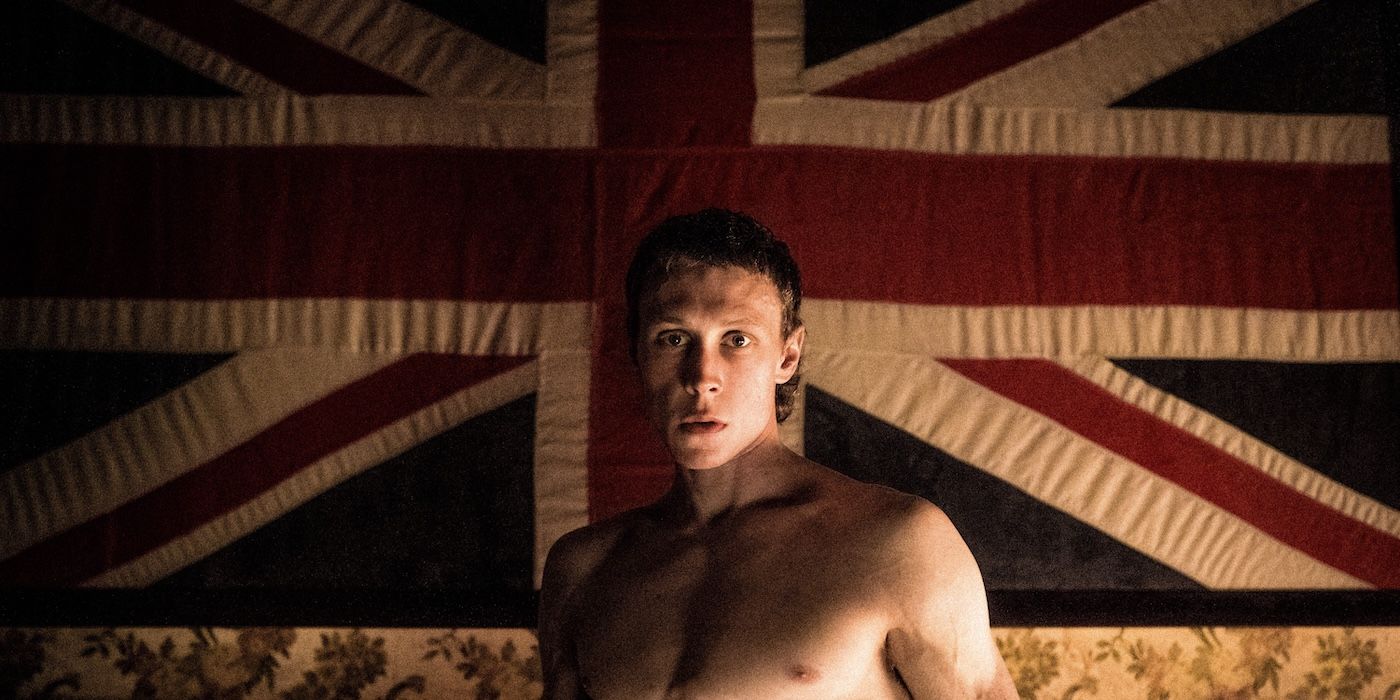
Ned Kelly is one of the most infamous figures within modern Australian history, and has inspired more than a few compelling creative interpretations; similar to American icons like Wyatt Earp or Davy Crockett, Kelly has been mythologized to the point that it’s often a challenge to narrow down what actually happened during his lifetime. Several interesting films have been made about Kelly’s life, including the 1906 silent epic The Story of the Kelly Gang, the 1970 Tony Richardson biopic Ned Kelly that starred Mick Jagger, and the Heath Ledger star vehicle Ned Kelly. While none of these films were hailed as classics by Australian critics, Justin Kurzel’s 2020 thriller True History of the Kelly Gang was a riveting, disturbingly violent exploration of Kelly’s notorious criminal career, even if it didn’t have any presumptions about telling the truth.
Kurzel has often been drawn to brutal, bleak period pieces that examine outlaw groups and resistance movements; his stunning 2015 adaptation of Macbeth, his underrated neo-noir thriller The Order, and even his controversial adaptation of Assassin’s Creed found a unique way of getting into the minds of complex characters who waged war against the establishment. True History of the Kelly Gang is an entry in the “bushranger” genre, which can be described as Australian Westerns that explore the history of violence within the outback. True History of the Kelly Gang embraces the best aspects of Australian cinema and offers the most thorough, nuanced depiction of Kelly on screen.
What Is ‘True History of the Kelly Gang’ About?
True History of the Kelly Gang was inspired by a 2000 novel of the same name, which told a fictionalized version of Kelly’s childhood, and how he became the leader of one of the most fearsome gangs within Australian history. Although he has not had any real contact with his father (Gentle Ben Corbett), a young Kelly (Orlando Schwerdt) discovers that his mother Ellen (Essie Davis) has tried to provide for the family by taking on a series of lovers, including the Police Sergeant O’Neill (Charlie Hunnam) and the infamous bushranger Harry Power (Russell Crowe). Power soon becomes his mentor, and coaxes Kelly into executing O’Neill, which lands him in prison. After being released, an older Kelly (George MacKay) decides to save his family, and ends up falling in love with the prostitute Mary (Thomasin McKenzie). However, a standoff with Police Constable Fitzpatrick (Nicholas Hoult) forces Kelly to go on the run, turning his anti-establishment crimes into a rally cry for disenfranchised people across the outback.
True History of the Kelly Gang is a profound examination of the lingering effects of violence, and how wounds can materialize in psychological ways years after they were first inflicted. The abuse that his mother endured when he was a child gives Kelly an unshakable feeling that he must act as a paternal figure within his family, and that revenge is the only opportunity he has to establish himself as his own man. Kelly’s frustration with his own father is what drives him to attack the paternal figures within his life, as he even begins a feud with Harry. Despite his aggressive demeanor, Kelly’s actions are grounded in a genuine affinity for his family; the only reason that he attacks Fitzpatrick is that the Constable had attempted to marry his sister, Kate (Josephine Blazier), which triggered his protective instincts.
‘True History of the Kelly Gang’ Isn’t a Standard Biopic
True History of the Kelly Gang crafts unique interpretations of its well-known historical figures, and doesn’t commit to creating clean-cut heroes or villains. Despite the legacy that he would earn, Kelly never sees himself as the sole representative of the Australian people, as he is only goaded into feuds with figures of authority that undermine him. MacKay gives a magnificent physical performance, as Kelly has learned to distinguish himself by giving into his raw, animalistic tendencies. Crowe is a fascinating mentor, as Power is so committed to the idea of unleashing one’s violent potential that he is even willing to risk inciting Kelly’s anger. The film is also surprisingly depthful in the depiction of its female characters, as the romance between Kelly and Mary is surprisingly tasteful and moving, adding stakes to the haphazardly violent third act. Even though Kelly has the goal of saving his mother, it’s suggested that Ellen has used her son’s rage to gain power of her own.
True History of the Kelly Gang is a visually exciting film that features sprawling, gorgeous shots of the Australian environment, only to undercut them with moments of shocking violence. Even if the film states from the beginning that it is not an entirely accurate biopic, there is a sense of realism within its depiction of violence, as none of the battles end up making the characters feel heroic. At times, the torment that Kelly feels about the horrific actions that he has committed are visualized in a surrealist way, which gives the film the aesthetics of a psychological horror film. It’s perhaps this non-linear, artful approach to Kelly’s career that captures the impact that he had on Australian culture, as the film concludes with a thoughtful consideration of why he has become a hero of folklore. While it can’t be mistaken for an “awards-bait” historical drama or a crowd-pleasing adventure epic, True History of the Kelly Gang is unquestionably one of the boldest and most thought-provoking westerns of the young decade.
True History of the Kelly Gang is available to stream on Hulu in the U.S.



