

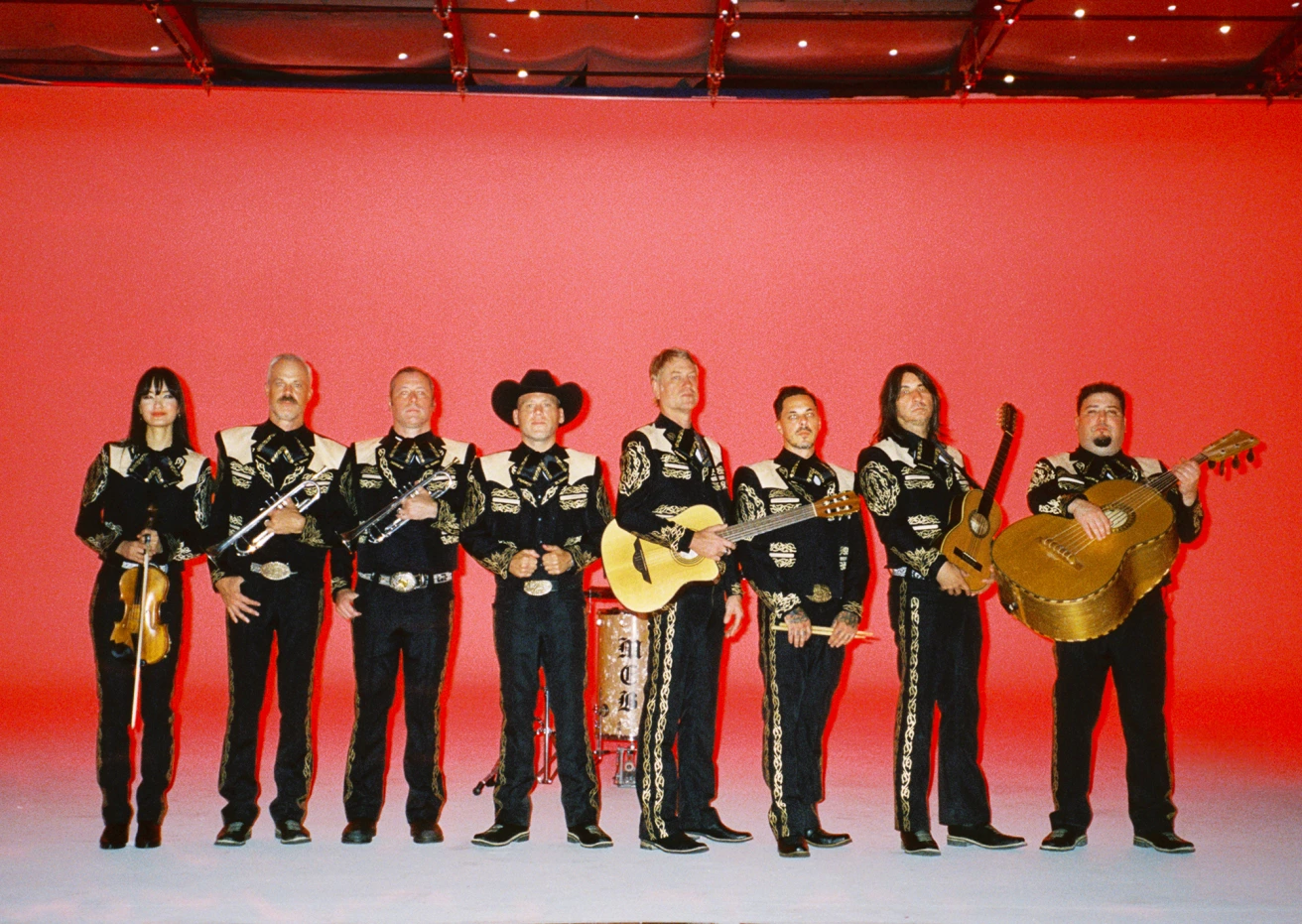
Mariachi El Bronx have always lived in a space between tradition and reinvention. What initially began as a creative experiment back in 2008 as an alter ego of the Bronx has turned into a melting pot of cultures and sounds, fusing mariachi music and the punk edge their fans know them for. After 12 years since their last studio project, the band are releasing their fourth full-length, Mariachi El Bronx IV, out Feb. 13 via ATO.
The album was written during a time when frontman Matt Caughthran was grieving the deaths of loved ones while preparing for his own wedding and future — and that dichotomy is woven into every track. Across the LP, they explore extremities, from love ballads to outlaw anthems, like “Bandoleros,” their new single, which leans into the spirit of corridos — Mexican storytelling — which focuses on heroes, outlaws, and forgotten figures.
Read more: Deafheaven will release their new documentary The Vast Sterling Purple
To celebrate the release of Mariachi El Bronx IV, the band will host a livestream of their record release show in Tijuana via Veeps. “This is something we’ve always wanted to do, and with the new album, the timing finally feels right,” the band say, touching on sharing the album across the border and in front of a global audience at the same time. “Tijuana is a crazy place, and we’re a crazy band, so this should definitely be must-see TV.”
“Bandoleros” leans into outlaw imagery and moral gray areas — what drew you to that character or perspective for this song?
This song has always felt like a battle cry to me. The music is so badass. There’s a lyrical subgenre within mariachi music called corridos — songs about heroes, outlaws, and social issues. Drug dealers famously had songs written about them called “narco corridos.” I wanted this song to have that outlaw corrido feel.
Musically, the track has a strong sense of momentum and drama. How did you want the arrangement to support your lyricism and storytelling? How does the sound reflect the bandit character, and vice versa?
It all goes hand in hand. I rely heavily on the emotion of the music to dictate the melodic feel and lyrical approach. With this song especially, the music is the horse — I’m just enjoying the ride.
Where does “Bandoleros” sit emotionally within the album? Does it represent escape, defiance, or something more complicated?
I think escape is a big part of it. I tend to beat myself up a lot during the writing process, so sometimes it’s nice to close your eyes and let the music take you somewhere unexpected.
You’ve described Mariachi El Bronx IV as your most personal record yet, written during a time of both grief and joy. How did those two extremes shape the way you approached songwriting?
I don’t know if it’s any more personal than the other albums, to be honest. It had been 10 years since we made a record, and a lot had changed in my life and in the world. My aunt had recently died from cancer, and I was only months away from getting married. There was so much I wanted to say. I felt pressure to write the perfect love song, the perfect grief song, and everything in between.
I get lost in every record, but at times during the writing of this album, I felt like I was drowning. It was hard to separate myself from the process, but it’s not about me — it’s about the song. There’s a constant give and take. This album rotates between moments of raw emotion and escape.
Auzzy Nufable
Mariachi El Bronx began as an experiment in 2008 and have since evolved into a long-term creative identity. How has your relationship with this project changed over the years?
It hasn’t changed much. This band has always been super special to us, and it always will be. If anything, you become more protective of it. That was actually a big motivator for writing a new album — the band started to feel like a memory. We needed new songs to bring it back to life.
Recording while the Eaton Canyon fires were burning nearby must’ve felt like there was a sense of urgency or instability while recording. How did that influence the album’s sound or themes?
Yeah, it was definitely a heartbreaking time. For us, in those moments, the album became something everyone could rally around and focus their energy on. I don’t think it influenced the sound or themes as much, since most of the songs were already written, but it definitely influenced the energy and the performances.
This album sounds rooted in very specific places — Los Angeles, East LA, Tijuana. How important was a sense of geography in shaping Mariachi El Bronx IV?
I think it’s super important — maybe more so for the band itself than for the album or the songs. The history of mariachi music is very regional; you get different sounds and instruments depending on where you are. Geography, just like history and culture, plays an active role in the music. Without it, a song can almost feel incomplete. Southern California is our region, and the modern era is our time.
Throughout the record, you use characters, like lovers, gamblers, former playboys, and more, to explore modern life. Why does storytelling through characters feel like the right lens for expressing very real, present-day emotions?
Honestly, the music is so beautiful and cinematic that not telling a story would sell it short. With the Bronx, the music is loud and aggressive, so the lyrics and melodies match that energy. With El Bronx, the music has so many layers and so much emotion that the lyrics and melodies need more depth. Characters and storytelling provide that depth.



