

Reading a crowd as a DJ means observing how people respond to your music and adjusting your track selection, energy and direction in real time. This ability to look at a crowd of people and figure out what they want is one of the most important skills out there and is what separates a great DJ from a static Spotify playlist.
But it isn’t always as straightforward or natural as you might imagine. So how do you actually learn to do it?
Listen to the Room First
Watch Before You Act
A lot of DJs only really think about the crowd once they’re already behind the decks. But really, the process of reading the room starts long before that.
Make sure you arrive early with plenty of time before your set, and you spend time getting a good feel for the place. See what tracks are going down well, and people are vibing with.
Even before this, you can speak to other DJs, the management of the venue and check out their Instagram to get a sense of the place, the usual crowd and the sort of music they play.
You’re inheriting this momentum from the previous DJ, so the last thing you want to do is completely switch up the vibe into something wildly different and give everyone in the room whiplash from the transition.
The Dancefloor is a Collective
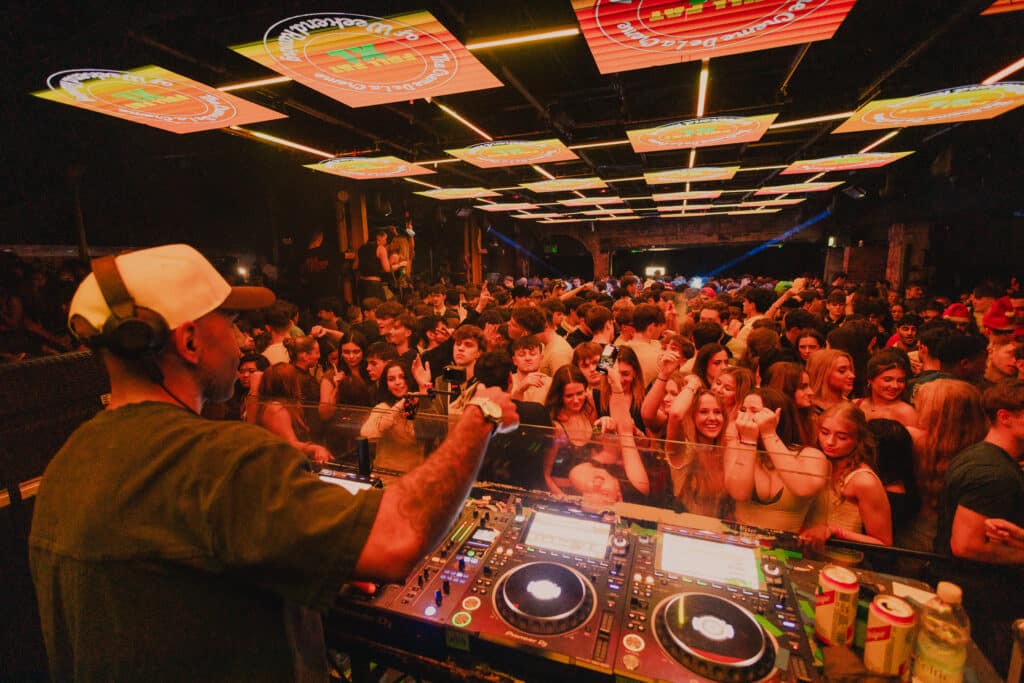
One of the most useful ways to think about a crowd is as a single organism. Instead of seeing a room as loads of separate individuals, look at it as one shared energy.
That way, your job isn’t to try and impress one or two people. Instead, mentally zoom out and focus on the bigger picture. Try and get an overall sense of the total energy in the room and work with that.
It’s easy to get distracted and latch onto whatever reaction feels loudest. Now, sometimes you get some real party starter people that drive more people to the floor and help build the energy up (and we’ll cover that more later on), but try not to give them an exclusive show. Instead, see them in the context of the whole room.
Context Changes Everything
The same music doesn’t land the same way in every room. This may sound obvious at face value, but it’s worth keeping in mind so you go into things already blinkered by existing ideas of what you want to play.
Three things change how music lands:
What time you’re on makes a huge difference. A warm-up slot at 10 pm is obviously going to go down very differently from a 5 am peak-time one, when the crowd are already hyped up and inebriated.
The venue itself is another huge factor. If you’re in a dark, sweaty underground club, people are more likely to get moving than in some trendy bar where half the crowd are sitting down eating. Trying to force the wrong vibe is only going to end badly.
Similarly, who’s in the room changes things again, so take note of the general profile of the crowd in the venue. We wouldn’t normally condone making broad sweeping generalisations about people based on how they look, but it’s the name of the game here.
Lawrence James
DJ + CrossfaderTutor
Crossfader Tutor Top Tips
“Open your eyes. It’s very easy to spend half the night staring at your screen, whether you’re on a laptop or CDJs. But if you’re not looking at the crowd, you’ve got no real idea what’s happening in the room. You need to see what they’re doing, see if they’re singing, see how they’re reacting. Sometimes you’ve even got to force yourself to look up and check what’s going on.”
Making Decisions in the Booth
Taking Requests
Often, you won’t have to work hard trying to read a crowd to figure out what they want. Instead, they’ll just come right up to the DJ booth and tell you exactly what they want.
You don’t have to play everything you’re asked to, or you’ll quickly just become a human jukebox. One request on its own doesn’t mean much. There will always be someone who wants something really rogue that doesn’t fit the vibe at all.
It’s when you start hearing the same sort of requests again and again that you might want to take notice. What’s more important is that you’re picking up on the patterns and the intentions behind them. Are people asking for something that’s more commercial and familiar, more high-energy and dancy or more chilled out?
Now, it’s also worth saying that there’s no one flat rule for requests as it varies a lot on context. If you’re at a wedding, you’re going to lean on requests (even the slightly leftfield ones) much more, and if you’re playing a proper techno club night, you’re well within your rights to refuse them.
Knowing how to deal with requests is a must-know skill for any Open Format and event DJ. If you want to know how to learn the mixing tricks that let these DJs take requests and mix any tunes together check out our full guide to Open Format mixing.
Staying Flexible
Most of the time, you’ll be going into a set with at least a rough idea of what you’ll be playing. You’ll have some new tracks you’re excited to drop for the first time and an idea of how you’d like the night to unfold. The problem is treating that plan like it can’t change.
However, that doesn’t mean you should start scrambling around to completely mix things up the moment that something doesn’t land as you’d hoped, and maybe you notice a few people move. In bigger clubs especially, people drift between rooms, head to the bar, and then maybe come back again. If you treat every bit of movement as a sign you’re losing them, you’ll start making unnecessary changes and end up messing up a floor that was actually fine.
The trick is to keep testing and reacting. Once you’re playing, you’re basically running small experiments. Try a few different directions and see what actually shifts the room. Do they respond better when it’s a bit faster, or when it sits in a steady groove?
Watch for things like:
People leaving the floor
People arriving to dance
Who’s really going nuts, and how much
Who’s just hanging back
Over a handful of tracks, those reactions start to tell you what they’re really into. If you stay observant and adjust based on that, each record gives you more information about where to take it next.

Jamie Hartley
DJ + CrossfaderFounder & CEO
Crossfader Tutor Top Tips
“If you’re on a roll but you can feel it starting to wear thin, you’ve got to think ahead. If you just keep doing the same thing for the next half hour, you’ll lose them. So I’ll look for a wild card tune they wouldn’t expect. Not a total opposite genre, maybe a throwback or a cool edit, just something that grabs their attention again.”
Taking Control
The next step, now you’ve got a feel for things and you’ve got a good two-way connection with the crowd, is knowing when to start steering rather than just responding.
Building Trust
You’re in control of the room, but they’re not going to follow you blindly. If you want the freedom to take things somewhere more interesting later on, you have to earn that first. That usually means giving them enough of what they came for so they feel like they’re in the right place.
Early on, that might look like:
Playing records that clearly fit the night
Reinforcing the core vibe before pushing it
Showing you understand the brief
If the brief is commercial, you can’t open with obscure leftfield records and expect patience. When DJs push their own taste too hard too early, especially in mixed crowds, the room pulls back.
There’s an unspoken agreement in any venue. People have paid to be there, and they expect a good night. Once they feel like you understand that and you’re delivering on it, they’re far more open to going with you when you change direction slightly.
Being able to read the crowd and take them on a journey only works if you can actually find the tunes you need. To learn how to properly sort out your USB, check out our full guide to managing your music.
Play the long game
If you’re starting out your set and the crowd’s loving what you’re playing, there’s always a strong temptation to just give them what they want and hit them with all your biggest tunes right off the bat. This is where you need to start to deviate from purely reading the room and thinking about what the crowd likes, and start thinking about the bigger picture of the night.
The best DJ sets are when you can take the crowd on a journey through peaks and troughs of energy. If you’ve got a big, multi-hour set, you need to make sure you’re not blowing your best stuff in the first hour, so you’ve got nowhere left to go once the room is actually full and at peak excitement.
To get around this, it’s often better to think in sections or blocks of tracks rather than just individual tunes. Instead of just going for what’s going to land in the moment, plan a few songs ahead, and if something’s worked well, think of what you’ve got like that and get it lined up.
Want to Become a More Complete DJ?
Reading a crowd is just one skill that makes a great DJ. To really stand out, you need the mixing ability to really feel confident behind the decks. Only when those basics are second nature do you have the headspace to actually focus on the room.
When you join Crossfader for free, we’ll give you a custom learning journey that shows you the skills you need to level up your DJing, including mixing fundamentals, transitions, and career advice. This is structured with clear progression and taught by experienced DJs, so you’ll learn the right way rather than random bits from YouTube videos. You’ll also get access to 3 free full courses so you can learning right away.



