

By Jonathan Klotz
| Updated 14 seconds ago

There are stories that are told by every generation. There will always be a James Bond, a Robin Hood, and a Spider-Man. Those stories are timeless and will always find a way to appeal to a new generation.
Some stories seem like they should fit that mold, but somehow, Hollywood can’t get it right. But where there’s the scent of possible money, they’ll keep right on trying, for better or worse.
This is why Lost In Space…. FAILED.
The concept is simple, and on paper, should have four-quadrant appeal (Hollywood executives love hitting those quadrants). It’s about a family, and they’re stranded in space.
A simple concept, but hard to execute, with only the original 1960s series achieving any lasting success. The 90s movie is a perennial contender for the “Worst Sci-Fi Movie of the 90s,” and although a Netflix series ran for three seasons, it went largely unnoticed.

The problem is that the original series is campy and goofy, leaning hard into the absurdity of the premise. Modern retellings tried to make it, respectively, dark and gritty or into a teen drama.
Lost in Space always follows the Robinson family on a mission to colonize a planet while Earth crumbles for various reasons (pollution, resource scarcity, or the result of a meteor strike) and every time, something goes wrong with the ship, either sabotage from the evil Dr. Smith, or alien robots in the Netflix series, stranding them on a desolate alien planet. Unlike Gilligan’s Island, the Robinsons leave the original planet and have a series of adventures in the far corner of space as they try to get back home.
The 1965 Original Was More Popular Than Star Trek

The 1965 series was compared to another sci-fi series that aired at the same time, Star Trek: The Original Series, but unlike the adventures of the starship Enterprise, Lost in Space was a ratings success. Mixing fantasy and sci-fi, with a focus on Will Robinson (Bill Mumy), the family’s youngest son, foiling the over-the-top villainous schemes of Dr. Smith (Jonathan Harris).
Aided by Robot and his classic catchphrase, “Danger Will Robinson!”, Will became the breakout star of the series. In retrospect, it’s Harris’s scene-stealing, unhinged performance as Smith that kept the series going for three seasons.

Dr. Smith is a coward, a genius, lazy, and an agent for an evil organization that can’t let the Robinsons’ mission succeed. Dr. John Robinson forgives Smith at the end of every episode, explaining why they put up with him despite his mustache-twirling villainy.
Lost in Space managed to keep this setup running for three seasons of diminishing returns. The fun plots, ridiculous acting, and cheap special effects turned it into a cult classic and a staple of cable television through the 80s.
A Victim Of The 90s Dark And Gritty Reboot Craze

The original had staying power and became a cult classic that seeped into pop culture. The 1998 movie, starring Matt LeBlanc at the height of Friends popularity, William Hurt, Heather Graham, Lacey Chabert, and in a moment of perfect casting, Gary Oldman as Dr. Smith, became a box office hit and then it simply vanished. Lost in Space (1998) was significantly darker, both in tone and visuals.
It tossed aside the bright, desolate alien planet for one that appeared to be in constant shadow. It somehow included time travel, sending the Robinsons into the future where Will and Dr. Smith are the only survivors of the expedition.
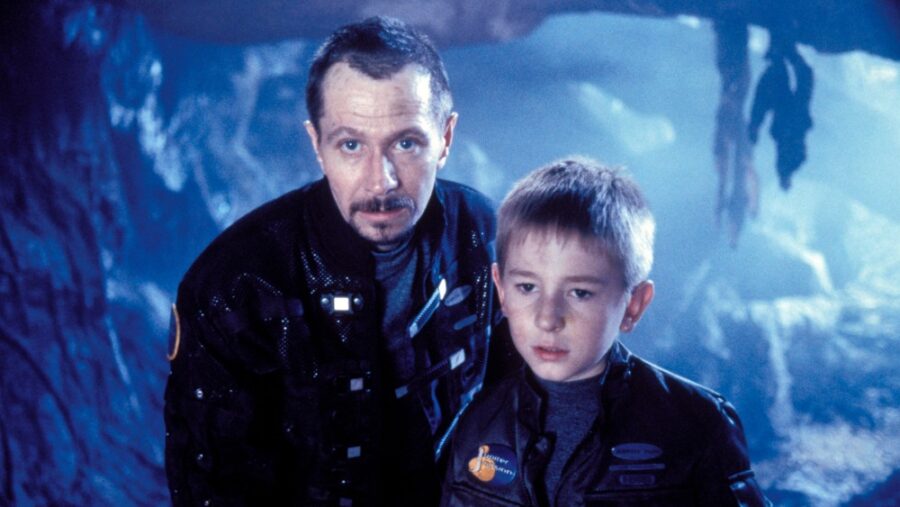
You’d be forgiven for forgetting that Heather Graham and Lacy Chabert (in her film debut) were part of Lost in Space (1998). It focuses like a laser on young Will dealing with future Dr. Smith, which only works as well as it does because Gary Oldman never gives less than 100 percent.
Missing from the story is any of the camp and charm of the original. Instead of Smith’s over-the-top cartoonish villainy, it’s a deadly serious story that attempts to be more Star Trek than Lost in Space.

For some reason, Hollywood executives love taking campy properties and turning them serious for remakes or reboots decades later that miss the entire point of the original’s appeal. Look at the X-Men decked out in black leather instead of the classic bright yellow uniforms, or Star Trek: Generations.
Lost in Space is the last sci-fi franchise that should be turned dark and gritty. The film was number one at the box office, made over $130 million, against a budget of $80 million, and then dropped like a rock as people actually watched it and realized it wasn’t the space action movie the trailers painted it as, and the plot makes no sense if you think about it for 30 seconds.
Netflix’s Teen Drama Version

That didn’t stop Netflix from bringing the series back out of mothballs in 2018 for one more go, this time as a series with Parker Posey as the latest Dr. Smith (sort of), and instead of only the Robinsons going into space, they are part of a larger colonial ship assaulted by aliens. Expanding the universe allowed the show to introduce different colonists as the seasons went on, but the show also updated the characters, turning the oldest daughter, Judy Robinson, into a medical doctor and the middle child, Penny Robinson, into a writer, documenting their experiences. The Robot lost its classic floppy arm design for a sleeker and sophisticated chassis.
The focus of Netflix’s take on Lost in Space shifts from Will and Robot to Judy and the family’s matriarch, Maureen Robinson (Molly Parker). That should work, especially the clashing of Parker’s Maureen and Posey’s Smith, but it’s let down by The CW’s teen drama-level writing.

Every entry in the franchise has included at least a little romance between Judy and Don West, but Netflix’s update turns it to 11 with Judy falling in love with Vijay, the son of the expedition’s leader. It’s not a bad series, but it’s not what fans of the original wanted, though there are cameos by the original stars, the best of which is Bill Mumy playing a different Dr. Smith.
From dark and gritty to teen drama, Lost in Space has been reimagined for different generations, and each time it misses the mark. The original is campy, fun, and delightfully over the top, which is why it became beloved by generations of sci-fi fans, and even if you’ve never seen a second of the series, you recognize Robot.

Studios today need to add their own twist on every IP they get their hands on, and in a desperate bid for attention, have collectively decided that being a fun, low-stakes series that embraces campy fun isn’t good enough to enter production. Instead, we have to endure a never-ending series of sci-fi shows, stuffed full of drama, when all we want is a goofy robot flailing its arms while the villain curses that they could have gotten away with it if not for those meddling kids.



