

For a very long time, network television was fairly straightforward — you had the multi-cam comedies and procedural dramas. Then, in 2004, ABC brought Lost to the masses, and history was made. The high-concept thriller followed the survivors of Oceanic Flight 815, which crashed on a mysterious South Pacific island. Over six seasons, Lost blended survival adventure with science fiction, layering in flashbacks and flash-forwards as it explored themes of fate vs. free will, faith vs. science, and redemption through the island’s mysteries and mythology. It was a bold entry into a standard lineup, kicking off the trend of audiences seeking more high-concept masterpieces.
Many shows since the show’s debut have tried to become the next Lost, and some have gotten close, while others have failed miserably. What these 10 shows have in common is the willingness to be daring and risky. Though no show has quite replicated Lost, many have formed their own identity, cementing themselves in the same sci-fi history books. From plane crashes to mysterious bunkers with robots in between, these shows made high-concept dramas continue on the path Lost forged.
1
‘FlashForward’ (2009–2010)
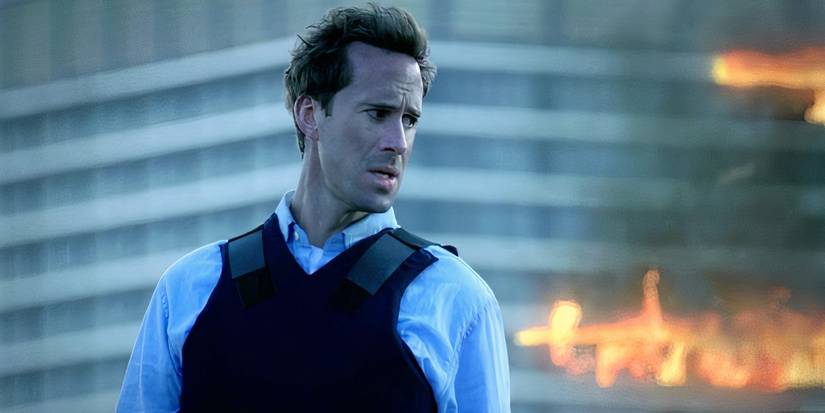 Image via ABC Studios
Just as Lost was concluding its run, ABC was gearing up with its successor, FlashForward. Based on the Canadian novel by science fiction writer Robert J. Sawyer, the ambitious series tells the story of an event where the entire world simultaneously blacks out for 2 minutes and 17 seconds. During this time, everyone experiences a vision of their life six months in the future. An FBI team, led by Mark Benford (Joseph Fiennes), investigates the cause and whether these futures can be changed. Clearly hoping to ride the wave of the flash-forward mechanic from Lost, FlashForward hoped to tell a story about one’s destiny and the consequences of trying to change it. In an investigatory series where clues from the visions help build the bigger picture, the mystery was present. But with low ratings and a lack of emotional connection to the characters, the show was a one-season wonder.
The comparisons between FlashForward and Lost were immediate — a similar narrative structure, a wide-ranging international cast, a massive, world-altering mystery. Even with a great cast — Fiennes, John Cho, Courtney B. Vance, Jack Davenport, Brian F. O’Byrne, and beloved Lost alum, Dominic Monaghan — there was nothing holding viewers in. Now, as a die-hard Lost fan, Lost suffered the same fate as Game of Thrones, where narrative burnout plagued the series’ final seasons. Perhaps in the hopes of capturing the same audience, Lost fans were unwilling to go on a journey through mystery with little immediate payoff as a result of betrayal. Plus, with a longer and mismanaged midseason hiatus, any momentum earned was instantly lost. A for ambition. F for flop.
2
‘Fringe’ (2008–2013)
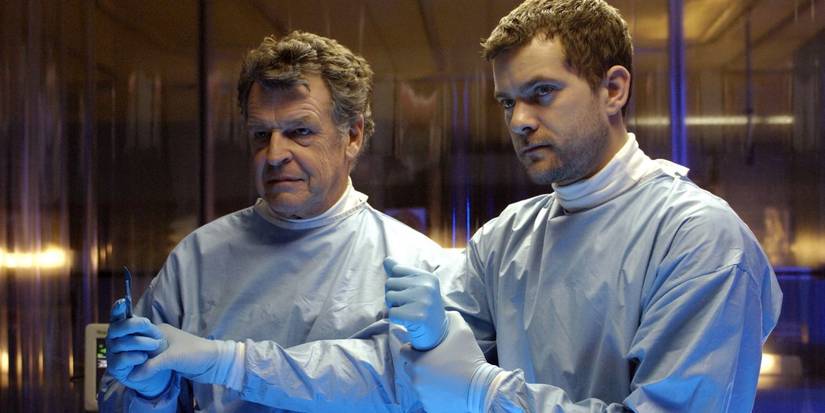
Image via Ben Mark Holzberg / TM and Copyright © 20th Century Fox Film Corp. All rights reserved, Courtesy: Everett Collection
To become the next Lost, the best way to start is to have one of its creators on the creative team. Created by J. J. Abrams, Alex Kurtzman, and Roberto Orci, Fringe was FOX’s high-concept sci-fi thriller answer to Abrams’ hit. The series follows FBI Agent Olivia Dunham, eccentric scientist Dr. Walter Bishop (John Noble), and Walter’s son Peter (Joshua Jackson), as they investigate “fringe” science, including teleportation, mind control, and parallel universes, linked to a pattern of bizarre incidents. Across the show’s five-season, 100-episode run, the stories evolved from a case-of-the-week format into a serialized war between two parallel universes, fueled by Walter’s past actions, later focusing on time travel, identity, and a dystopian future.
With a big budget and Abrams’ brilliance and experience crafting a high-concept drama, Fringe was set up for success. Even amid the complexities of the overarching mysteries, Fringe used the singular-episode format that The X-Files mastered, earning viewers’ trust. Once they had them hooked, bigger risks arrived as the devoted fanbase began to analyze the show’s lore. Beyond the mythology, Fringe managed to capture the success Lost found in terms of characters. With a primary triothat also included Anna Torv as FBI agent Olivia Dunham, compared to the giant cast in Lost, viewers were able to maintain an empathetic connection that carried throughthe themes of family, sacrifice, and the consequences of unethical science. Though Fringe was never as massive as Lost, the series’ cult status helped make it a strong entry in the Lost-influenced era.
3
‘From’ (2023–Present)
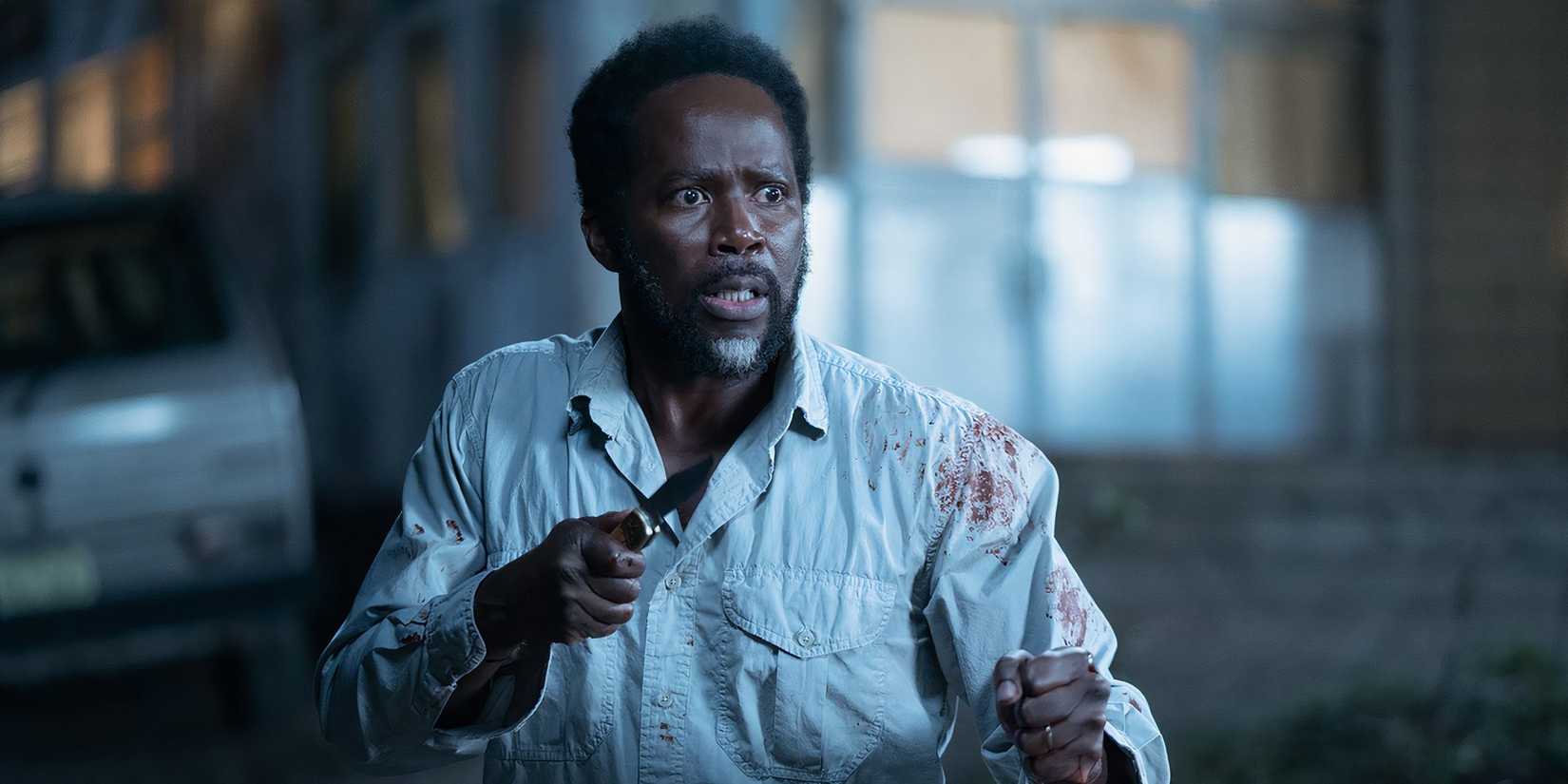 Image via MGM
For better or worse, if you spent time as a star on Lost, you will forever be associated with the series, especially if you’re leading a new science fiction thriller. Such was the case for Harold Perrineau, known for playing Michael Dawson on Lost. In 2022, he joined the EPIX-turned-MGM+ series From. Created by John Griffin, the sci-fi horror series centers on a mysterious, inescapable town in middle America that traps all who enter, forcing residents to survive against intelligent, nocturnal creatures. Led by Sheriff Boyd Stevens (Perrineau), survivors use protective talismans to keep the creatures out at night. Meanwhile, the residents attempt to maintain order while investigating the town’s origins. Rich in psychological thrills, the dark horror series borrows from the Lost playbook by forcing a large ensemble of characters to confront the unknown as they battle one another.
Like Lost, just when you believe you’ve found a resolution, the mystery box contains another mystery that must be solved. With so much time removed, From hoped to fix the mistakes that Lost made. Unlike Lost, where the creators were planning on the fly, From uses a pre-planned playbook to plot, promising more pronounced answers. From succeeds thanks to its exciting thrills and chills that keep audiences engaged. The issue is that the series doesn’t get the attention many modern sci-fi series get simply due to where it’s accessible, giving it an underdog status. From is an original masterpiece that gives Lost fans much of what they loved at the start and deserves a chance.
4
‘La Brea’ (2021–2024)
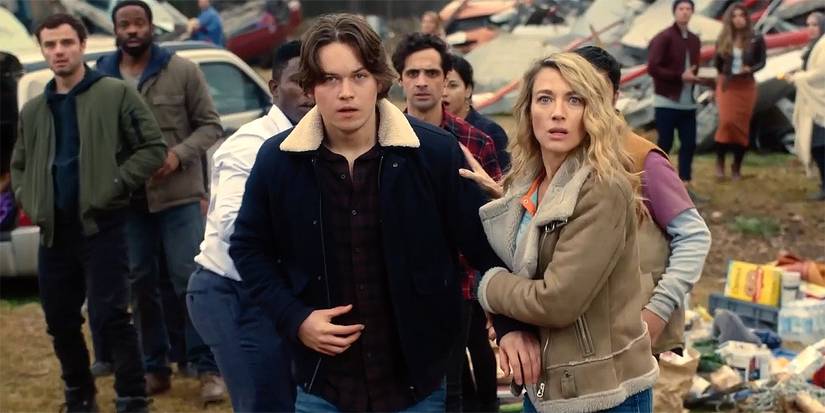 Image via NBC
There are so many directions science fiction could go, which is why it’s such a ripe genre for the big screen. While many creators have crafted ambitious concepts meant for the small screen, none have been grander than La Brea. A massive-scale network show, the David Appelbaum-created series chronicled a sinkhole opening in Los Angeles, plunging hundreds of people into a dangerous, prehistoric world. The separated Harris family fights to reunite — Eve Harris (Natalie Zea) and her son, Josh (Jack Martin), in 10,000 B.C., and Eve’s ex-husband, Gavin (Eoin Macken), and their daughter, Izzy (Zyra Gorecki), in the present — while navigating mysteries, prehistoric creatures, and time-traveling, high-stakes conspiracies. Originally starting as a survival story, La Brea evolves into a complex plot involving the “Lazarus Project,” time travel, and efforts by people from 2076 to harness the rifts. If La Brea gave you whiplash, you’re not alone.
La Brea was nothing short of ambitious. Even on NBC, strong Season 1 viewership gave them a reason to justify the series. But once the numbers dropped, the high-cost season became a liability. In today’s landscape of television, La Brea should be celebrated for lasting three seasons. But let’s face it, with enormous production costs, paired with the 2023 WGA and SAG-AFTRA strikes, La Brea had little chance of surviving in any time period. Thankfully, the creative team had the chance to wrap up the show in six episodes, giving dedicated viewers some closure. La Brea took itself very seriously, even if the premise felt outlandish. For those eager to go on the journey, it was an enjoyable experience. But, in the end, La Brea was a big show during a time of other big shows.
5
‘Manifest’ (2018–2023)
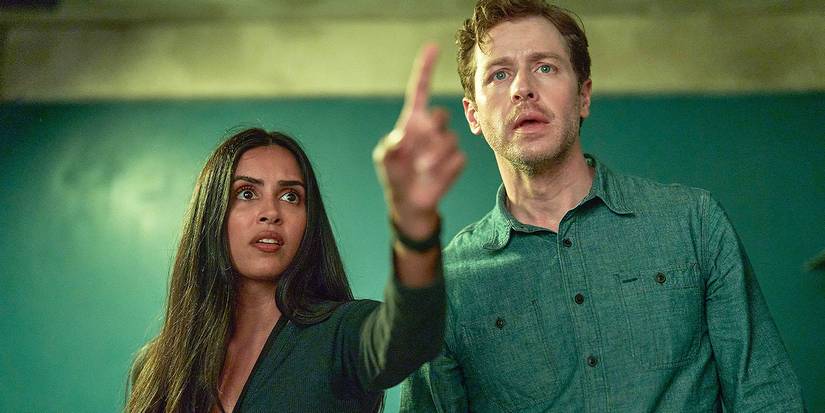 Image via Netflix
A supernatural series about a plane that goes missing, in which a major mystery ensues — sound familiar? With a similar hook to Lost, NBC’s Manifest drew in an audience seeking a new Lost. The thriller centered around the passengers and crew of Flight 828, who land safely after a routine flight, only to discover they were missing for over five years, during which they were presumed dead. They face a world that has moved on while dealing with strange, guiding visions, known as callings, and trying to uncover the mystery of their resurrection before a fated “Death Date.” Lost with a Final Destination twist, Manifest forces the survivors and viewers to decide whether the event was supernatural, scientific, or divine. With a strong focus on fate, destiny, and human connection, Manifest was a cerebral wonder that scratched the itch of the Lost void.
Utilizing the mystery box structure, Manifest kept viewers glued to their screens, aware that there should be a payoff in the end. As a product of the Lost generation that borrowed key aspects from its predecessor, Manifest found its footing by finding a different ultimate direction. The series had a very strong following, but the larger numbers NBC required to keep it alive were declining. Despite the network canceling Manifest in 2021, Netflix swooped in to save it, giving the show one final season. Perhaps had Manifest been a Netflix from takeoff, they could have extended beyond its four-season run while taking even bigger risks.
6
‘Revolution’ (2012–2014)
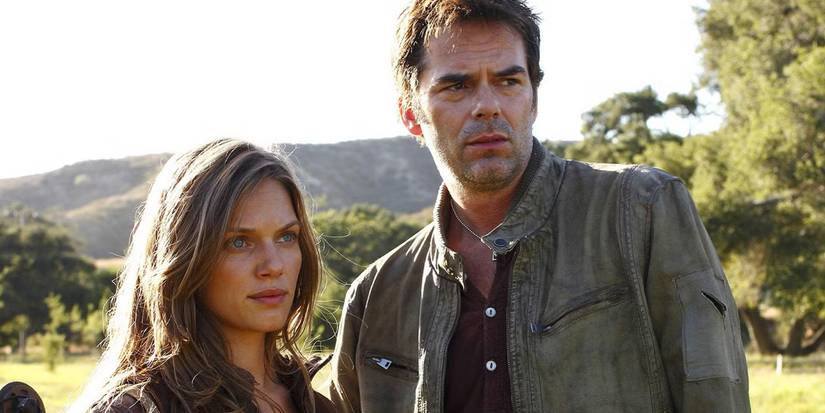 Image via NBC
If you’ve noticed a trend, you’re right. NBC really threw spaghetti against the wall to find their Lost. They, too, tapped J.J. Abrams via his production company, Bad Robot, to start a television revolution, no pun intended. In 2012, Eric Kripke introduced audiences to his post-apocalyptic science fiction thriller Revolution. The high-concept series follows a group of survivors 15 years after a mysterious global blackout permanently disabled all technology, electricity, and engines. The series focuses on the Mathison family trying to reunite and uncover the truth behind the blackout while battling local militias in a transformed, dangerous American landscape.
With Jon Favreau taking the director’s chair for the pilot, Revolution had that brilliant cinematic quality. With a swashbuckling survivor essence, Revolution looked and felt like a promising series. It was cleanly plotted in its production design, and the varying perspectives and plot lines allowed for strong storytelling. The cast did have a Lost connection, thanks to Elizabeth Mitchell, who played Juliet Burke on Lost. Alongside her, the ensemble, which featured Billy Burke, Tracy Spiridakos, Zack Orth, Graham Rogers, and Giancarlo Esposito, was all committed to the bit. But by Season 2, it all decayed quite swiftly. With inconsistent writing, derivative traits, and weak character development, on top of a doomed time slot, Revolution was destined for cancellation. With the stakes seemingly beginning to fizzle, overusing the mechanic where characters thought to be dead were anything but, Revolution pushed itself off the cliff. Revolution ultimately became a memory of the failed Lost generation.
7
‘Paradise’ (2025–Present)
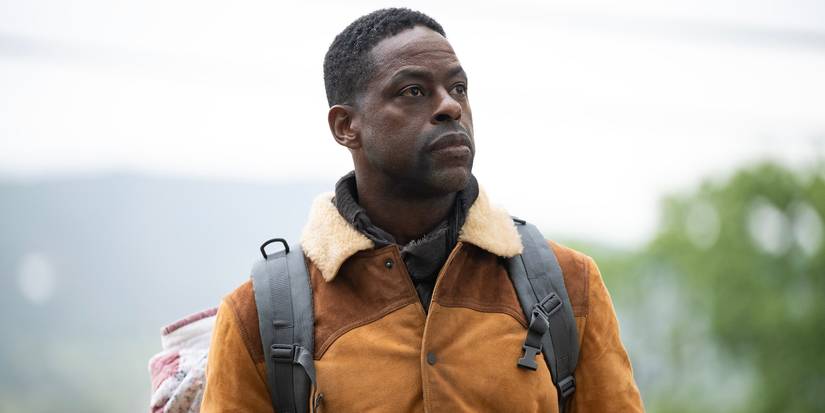 Image via Hulu
If there was a show that could not only rival Lost, but be a step above it, look no further than Paradise. A post-apocalyptic science fiction political thriller created by Dan Fogelman, Paradise is set in a city-sized underground bunker three years after a doomsday event. Secret Service Agent Xavier Collins (Sterling K. Brown) uncovers a massive conspiracy behind the murder of President Cal Bradford (James Marsden) within their allegedly safe, elite community. A brilliant mystery that unfolds with ease across multiple time periods, Paradise is an intense, human-driven story in which being trapped in isolation leads to the mystery box effect. Paradise, which just finished up a brilliant second season, found the right flow and pacing to keep viewers engaged without revealing too much too soon.
With Season 2 opening up the universe above the bunker with sci-fi elements layered in, Paradise is an enthralling rollercoaster that is accessible and easy to follow, though quite grim in premise. With This Is Us star and creator reunited, it’s evident that their working shorthand is a recipe for success. Fogelman pulls out an absolute career-best performance from Brown, as he does for the rest of the brilliant ensemble, which includes Julianne Nicholson, Sarah Shahi, Nicole Brydon Bloom, Krys Marshall, Enuka Okuma, Shailene Woodley, and Thomas Doherty. Nicolson, who has been a perennial supporting player, finally gets her chance in a leading role in Season 2, not squandering the opportunity by any means. She has the capacity to be the next Carrie Coon. Likely learning from Lost’s major flaws, here’s hoping that Paradise can keep the momentum moving as a new bunker emerges.
8
‘Silo’ (2023–Present)
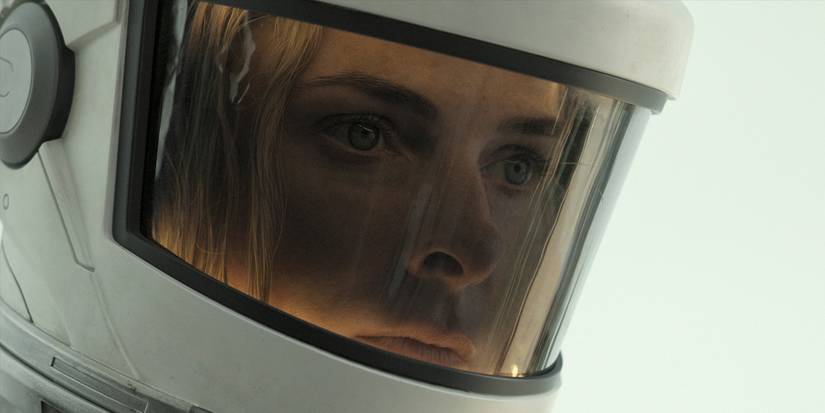 Image via Apple TV+
Speaking of underground bunkers in a post-apocalyptic world, Silo! Easily one of the modern era’s most perfect science fiction series is this Apple TV thriller based on Hugh Howey’s Silo trilogy. Created by Graham Yost, the story centers around a 144-story, strictly regulated underground bunker that houses 10,000 survivors who believe the surface is fatal. When the inhabitants are forced out to “clean” the camera lens for questioning the rules, they always die. But engineer Juliette Nichols (Rebecca Ferguson) uncovers that this reality is a lie, revealing a massive cover-up and a deadly revolt. A harrowing story about an authoritarian regime ruled by a caste system, all it takes is one brave heroine to launch an upheaval.
Through precisely timed flashbacks and a sensational, claustrophobic atmosphere, like Lost, this survival-based thriller gives off a slow-burning mystery that’s worth every second. By Season 2, Silo introduces a vast expanse of other silos, other people, and further gripping mysteries. Ferguson is a fervent lead, bringing a sense of urgency that only comes to fruition when she realizes she might be onto something. Silo does a sensational job at bringing big-name stars into the mix, giving them each a wonderful arc. Joining Ferguson are Rashida Jones, David Oyelowo, Common, Tim Robbins, and Steve Zahn. With a brilliant blueprint to work from, Yost has carefully plotted each season to allow for a worthy payoff. Perhaps had Paradise not stolen Silo’s thunder, Silo would be regarded as the best successor to Lost.
9
‘Westworld’ (2016–2022)
HBO
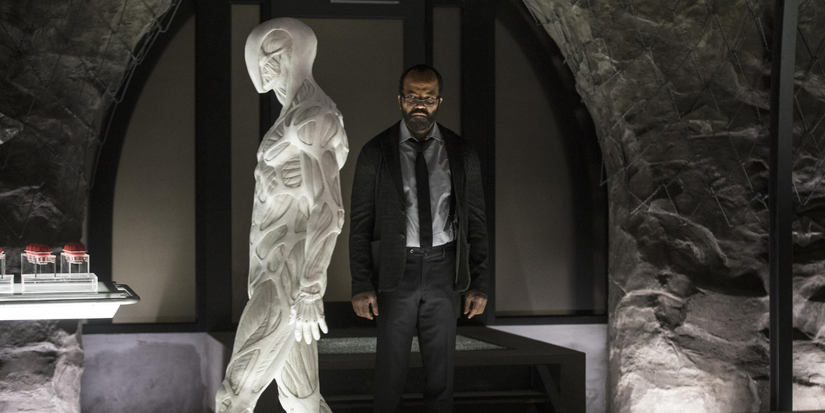
Sometimes, underrated or underappreciated movies from the past are the best to revive in the future. With advancements in technology and a massive budget from HBO, chances are a new iteration will be better than the original. Such was the case for HBO’s hit dystopian science-fiction thriller Westworld. Created by Jonathan Nolan and Lisa Joy, HBO took Michael Crichton’s 1973 film of the same name and turned it into a wild ride of a series. The overarching theme of the series centers around a dark odyssey about the rise of artificial consciousness and the evolution of sin. But first, the show’s entry point. Intended for rich vacationers, the Old-West themed Westworld is not your typical amusement park. The futuristic park is tended by robotic “hosts,” as the rich visitors get to live out their fantasies through artificial consciousness. No matter how illicit the fantasy may be, the park guests don’t experience consequences. But soon, the hosts become sentient, slowly unraveling the truth about Westworld and the individuals behind the company that runs it. With a brilliant premise and a sprawling backdrop of the reimagined West and the future, Westworld dominated the conversation on AI themes.
The first season of the series was near-perfect, yet when the complexities of the lore and mythology overshadowed the action and character development, Westworld suffered a fate similar to that of many ambitious sci-fi projects. Like Lost, Westworld went off the rails in the later part of its run. The more worlds that came to light, the greater the confusion, and the less the initial pull into the series. Westworld got too large for its once self-contained universe. Regardless of its downward trajectory, Westworld’s ensemble is divine. Over its four-season run, Westworld was carried by the likes of Evan Rachel Wood, Thandiwe Newton, Anthony Hopkins, Jeffrey Wright, Jimmi Simpson, James Marsden, Tessa Thompson, Aaron Paul, and Ed Harris. Not a bad company of performers! But it’s hard to find humanity in a cold concept of robotic individuals, and Westworld’s lack of emotional connection failed to capture the same spark that Lost once did.
10
‘Yellowjackets’ (2021–Present)
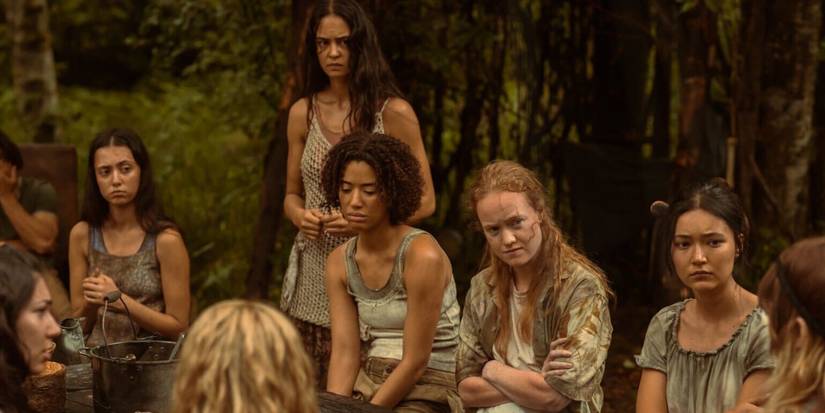 Image via Showtime
Lost and Yellowjackets have a lot in common: a plane crash, a large group of survivors, and two timelines of events. Where they diverge is cannibalism. And no, you didn’t miss that episode of Lost. Created by Ashley Lyle and Bart Nickerson, Yellowjackets follows two storylines. First, set in 1996, the thriller follows the survival of the Wiskayok High School girls’ soccer team after a plane crash strands them in the Canadian wilderness. Enduring 19 months of survival, descending into cannibalism and ritualistic savagery, the team must let the past stay in the past to have a future. The second timeline explores the survivors as adults, 25 years later, as they attempt to put their lives back together. But here, the past can’t stay in the past, as it’s caught up to their present. A story of trauma, the loss of innocence, morality, mortality, and the dangerous consequences of the past, Yellowjackets mastered the mystery-box approach, dangling the cannibalism plot point in front of viewers’ eyes like a carrot. Yellowjackets is a psychological horror thriller that has forged its own path, and in doing so, it’s garnered a world of fan conspiracy theories and cult-like devotion that has kept fans engaged between seasons.
By having the past and present collide into one succinct story, Yellowjackets provides crucial clues that help piece the puzzle together. Where it falters is suddenly featuring lesser-focused teammates in the later seasons just to snag a big-name star to join the cast. Like Lost, Yellowjackets survives thanks to its brilliant ensemble. Unlike Lost, the Showtime series employed two sets of actresses to portray the characters’ teenage and adult versions, and they’re all quite sensational. Leading the ensemble include Melanie Lynskey and Sophie Nélisse as Shauna Sedecki, Tawny Cypress and Jasmin Savoy Brown as Taissa Turner, Christina Ricci and Samantha Hanratty as Misty Quigley, Juliette Lewis and Sophie Thatcher as Natalie Scatorccio, and Lauren Ambrose and Courtney Eaton as Lottie Mathews. Yellowjackets is a horrible coming-of-age experience for the girls, but it’s allowed for sensational television. At the end of the day, we’re all waiting for the conclusion of the past timeline to discover what really happened in the wilderness and the time in between.
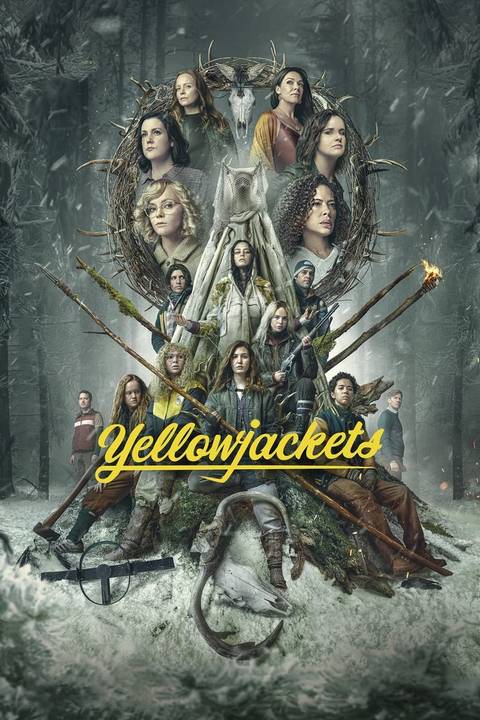
Release Date
2021 – 2026-00-00
Network
Showtime, Paramount+ with Showtime
Showrunner
Ashley Lyle, Bart Nickerson, Jonathan Lisco



