

Miniseries are the perfect TV format when they’re done right because there are no filler episodes, no “we’ll deal with that next season,” and no wandering subplots that exist to pad time. You hit play and the story starts tightening immediately. Unless the series is particularly terrible, every scene moves the case, deepens the character, or raises the risk. That’s why the best miniseries feel modern even when they’re older than half the streaming apps on your phone.
This list is for the shows that should be in everyone’s rotation and somehow aren’t. Some got buried by timing. Some lived on the wrong network. Some are hard to categorize. All of them deliver the same feeling: you finish an episode and your brain starts negotiating with you to watch the next one.
1
‘The Lost Room’ (2006)
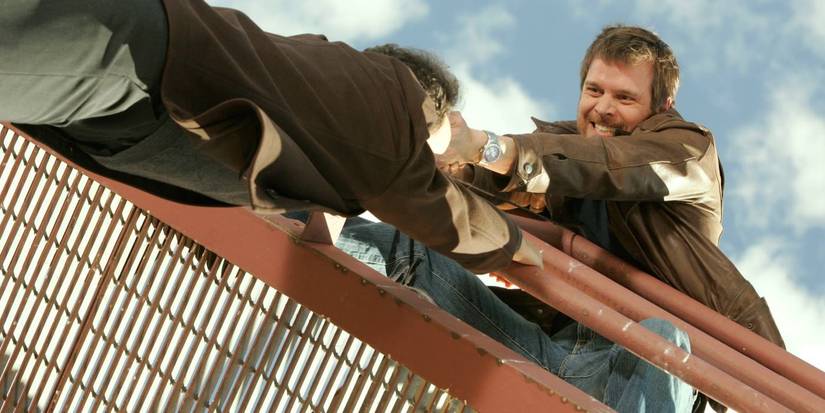 Image via SYFY
The Lost Room is what you watch when you want a thriller premise so clean you can sell it in one sentence, and then you press play and realize it’s even better than the pitch. The show follows Detective Joe Miller (Peter Krause) as he walks into a motel room that doesn’t belong to normal geography — step out the door and you can emerge anywhere. Then his daughter disappears inside it, and the show immediately turns personal panic into a larger mystery: why the room exists, who controls its objects, and what each object can do.
What makes it binge-perfect is how every episode turns the rules tighter. The objects inside the room, each one has a unique effect that creates specific problems. Christopher Leone and Laura Harkcom, the creators of the show, have kept the hook and pace extremely strong by making every faction understandable: collectors, cult-like believers, criminals who see profit, desperate people who seek rescue. Joe’s drive never slips, so you stay locked in because the goal stays simple: get his kid back, survive the people who want the Room more than he does.
2
‘River’ (2015)
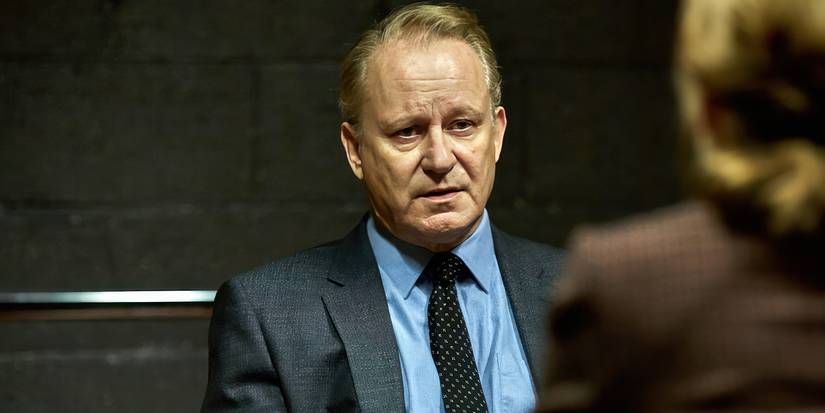 Image via BBC One
River pulls you in through one character and never lets go. That’s DI John River (Stellan Skarsgård), who is brilliant at work and falling apart at the same time. His partner Stevie (Nicola Walker) is gone, and River keeps seeing her, talking to her, arguing with her, leaning on her, while still trying to solve what happened. The cases move, but the real tension is watching him function under grief that he refuses to file away neatly.
The show feels like a streaming-era thriller before that was the default: each episode gives you investigation progress and also tightens the emotional screws. The visions show guilt, love, and denial in real time while he interviews suspects, follows leads, and makes mistakes.
3
‘The Honourable Woman’ (2014)
 Image via BBC Two
Some miniseries entertain you. This one possesses you, the kind where every conversation feels like it has consequences, and every silence feels like someone just made a move. You keep thinking, “I should pause and process that,” but the story won’t let you breathe, because the stakes keep shifting underneath you: security, optics, loyalty, history. The Honourable Woman is a forgotten masterpiece that turns geopolitical tension into something intimate and brutal.
Nessa Stein (Maggie Gyllenhaal), although a woman in danger, isn’t written solely from an archetype angle but instead, as a person trying to turn inherited damage into something constructive, and getting cornered from every direction for daring to try. When you watch this miniseries, grief becomes pressure, relationships become bargaining chips, and good intentions become a target. It rewards attention like a great novel, a small early detail comes back with teeth later, and you keep watching because you can’t shake the need to see if she can outsmart a situation built to swallow her whole.
4
‘Show Me a Hero’ (2015)
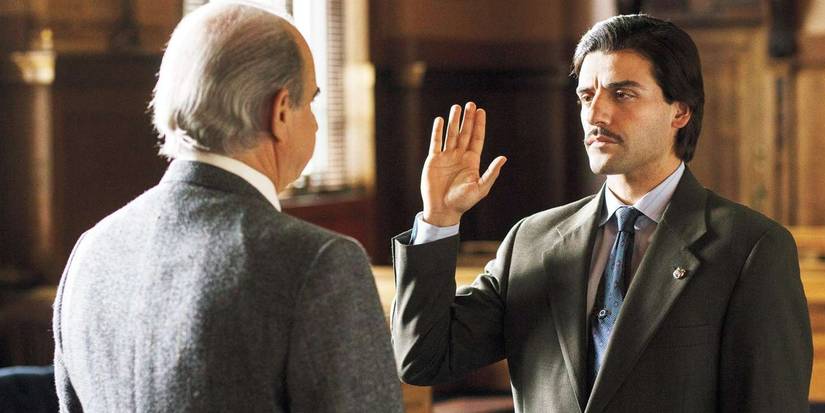 Image via HBO
Show Me a Hero is a thriller without guns and its weapon is pressure. The premise is, Nick Wasicsko (Oscar Isaac) becomes mayor of Yonkers and gets trapped in a housing crisis that turns city politics into nonstop escalation: court orders, public rage, career sabotage, moral compromise, and the exhausting truth that doing the right thing can ruin you in public. You’re watching meetings, speeches, backroom deals, and protests, and somehow it lands with the same tension as a crime show because every decision creates immediate fallout.
The show is essentially a slow squeeze: the more Nick tries to solve the problem, the more the problem consumes him. It shows both sides up close, people terrified of change, people exhausted by injustice, officials managing optics, families living the consequences. Nobody remembers this show probably because it’s not flashy. But it feels unforgettable once you watch it because it shows exactly how power breaks people when the cameras never leave.
5
‘State of Play’ (2003)
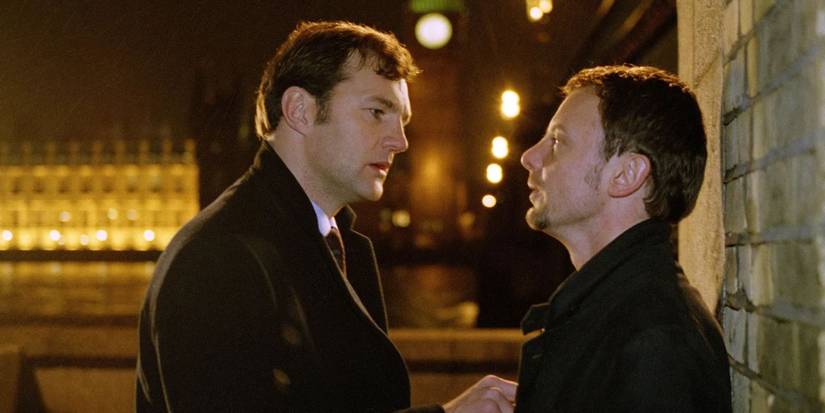 Image via BBC One
State of Play is six episodes of pure momentum: a death that looks simple at first, a political machine that wants it buried, and journalists pulling the thread anyway. Cal McCaffrey (John Simm) digs in as the reporter who still cares about getting it right, while Stephen Collins (David Morrissey) sits near the center of the blast radius as a politician with personal ties to the case. The show’s genius is making each discovery feel like it changes the map — almost how the show Bodyguard does it.
It’s a miniseries built on relationships. Cal and Stephen’s relationship fits so well on the screen because it becomes about trust. The supporting cast, Kelly Macdonald, Bill Nighy, Polly Walker, etc. is stacked too, but it never turns into noise; each person adds pressure in a specific direction. You keep watching because the investigation feels real, and the ending satisfies you because the series actually completes the puzzle instead of teasing you for another season. The miniseries also has a movie counterpart, where Russell Crowe stars as Cal and Ben Affleck as Stephen.
6
‘Carlos’ (2010)
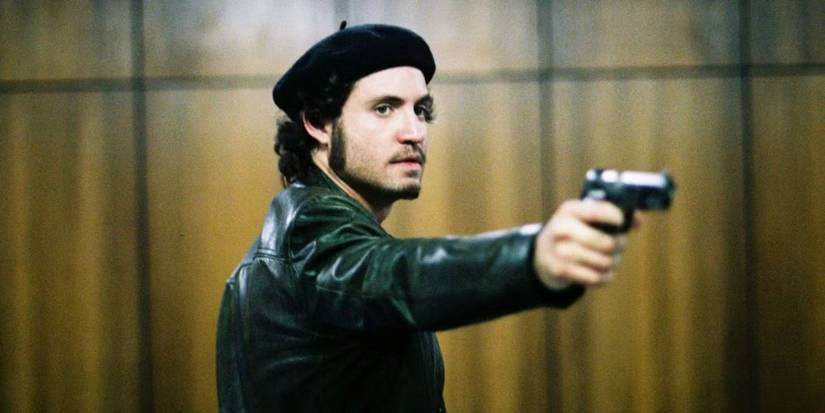 Image via Canal+
Carlos plays like watching a life burn at full speed. You’re pulled through 1970s and ’80s geopolitics on pure momentum: charisma, ambition, ego, and a dangerous talent for turning chaos into a brand. It’s exhilarating for a moment, and then suddenly terrifying when you realize it can’t possibly last. The movie and miniseries is all about logistics and consequences: alliances that rot, betrayals that come cheap, violence that turns routine the second it becomes work. That bluntness is exactly why it’s so gripping.
The titular character, Carlos the Jackal (Édgar Ramírez), starts to depend on attention. At first, it’s a byproduct, then it becomes the goal, and soon he’s making choices to preserve the image more than the mission. That’s when the tension turns claustrophobic: the net tightens as intelligence agencies adapt, allies get skittish, money runs thin, and the world shifts out from under him. He keeps moving like someone who thinks he’s steering history, until it becomes obvious, in the ugliest way, that history is moving without him and all he can do is run faster while the room gets smaller. This miniseries is pure binge fuel.
7
‘The Corner’ (2000)
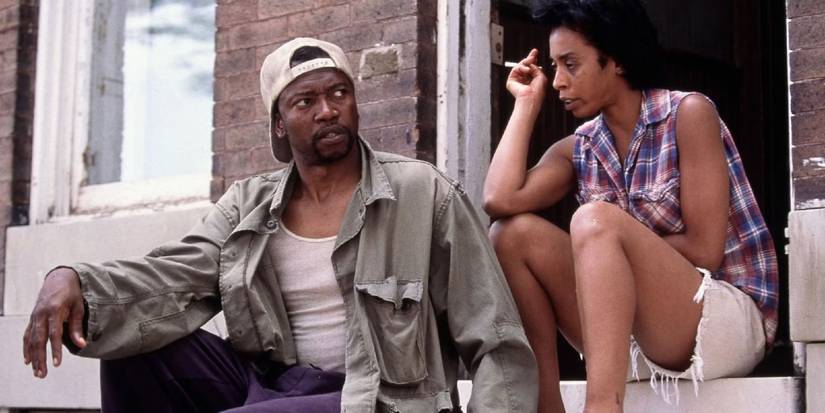 Image via HBO
The Corner is a miniseries you’ll remember because it doesn’t look away. It follows a group of people in West Baltimore where drugs shape every decision — what you do for money, who you trust, how you survive the week. Gary McCullough (T. K. Carter) wants to get out and can’t, and the series shows you watch somebody try, fail, try again, and get dragged back by the realities around him.
The series is built on specifics that make it hit harder: routines, corners, family dynamics, the small moments of hope that get interrupted by addiction and poverty. And that’s not misery TV either. It’s a story about people with personalities — humor, pride, and love — people you start caring about, while the system around them keeps demanding payment. You keep watching because the truth of it is gripping, and because the series treats its characters like they’re worth your attention.
8
‘Olive Kitteridge’ (2014)
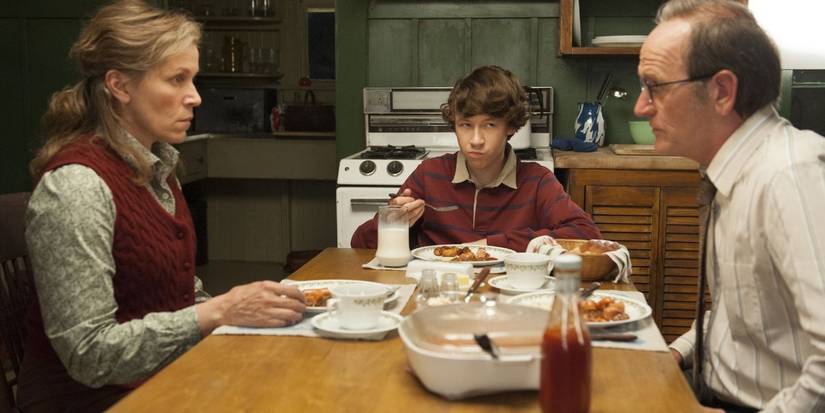 Image via HBO
Olive Kitteridge is quiet, sharp, and relentlessly addictive in a way people don’t expect. Olive (Frances McDormand) is blunt, judgmental, perceptive, and often right in the most uncomfortable way, and the series lets you live with her across years as her marriage, friendships, and relationship with her son shift in painful, believable increments. And weirdly, the thrill is emotional because you’re watching conversations where one sentence can change a relationship permanently, and the tension is waiting to see who says it.
Then there’s Henry (Richard Jenkins), who brings warmth and quiet sadness, and the series keeps showing how two people can love each other and still damage each other through habits and pride. Not to forget that the plot hits so well because you’ve met people like this, you’ve been people like this, and the show refuses to fake a tidy version of life. Olive Kitteridge fits the forgotten category well too, as I personally had never heard of it before watching it.
9
‘The Company’ (2007)
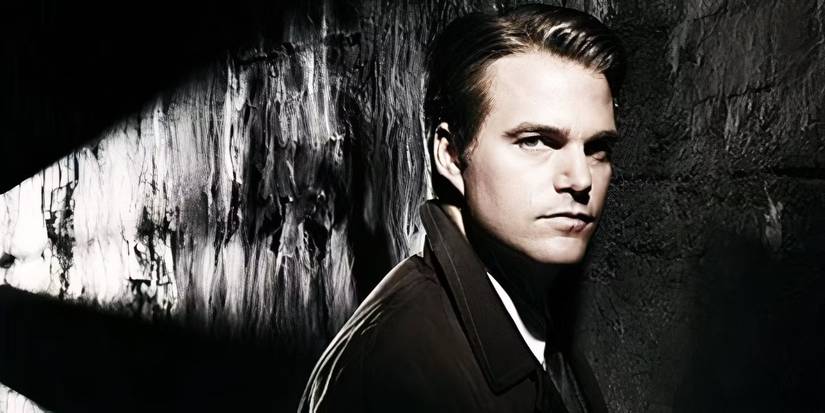 Image via TNT
The Company is for anyone who wants spy storytelling. It tracks CIA officers and Soviet counterparts through decades of Cold War shifts, and the premise heat comes from long-term tradecraft: relationships built to extract information, identities maintained under constant risk, loyalties tested by ideology and exhaustion. There’s Jack McAuliffe (Chris O’Donnell) who gives you the entry point as someone pulled into the machinery and shaped by it.
And it doesn’t just start from the middle of nowhere too — you see recruitment, surveillance, betrayals, the internal paranoia that spreads when you don’t know who’s compromised. It’s a very structured story for a miniseries. The best parts are when the show slows down to show the real cost — marriages strained, friendships turned into assets, the way suspicion becomes a personality trait. It’s extremely bingeable because it keeps rewarding attention across time jumps: something planted early pays off later, and you feel the satisfaction of a story that actually planned its long game.
10
‘John Adams’ (2008)
Last but not least, this one doesn’t teach you history so much as drop you inside it and refuse to let you look away. You can feel the heat, the fatigue, the panic. Everything is just one bad decision away from violence. Tom Hooper’s John Adams is about a man with nerves (Paul Giamatti) under his principles: stubborn, insecure, and still relentlessly working because he believes the law has to survive the moment.
The stakes are always immediate and human: reputation, survival, alliances that can fracture overnight, and the terrifying fragility of trying to build a country while everything could collapse. Hooper gives it a bruised, lived-in texture, so victories feel earned, travel hurts, rooms suffocate, illness feels like a real predator. Abigail Adams (Laura Linney) is the miniseries’ moral spine and emotional anchor, the force that keeps everything human, and she elevates the whole thing from great to unforgettable, if you have the taste.



